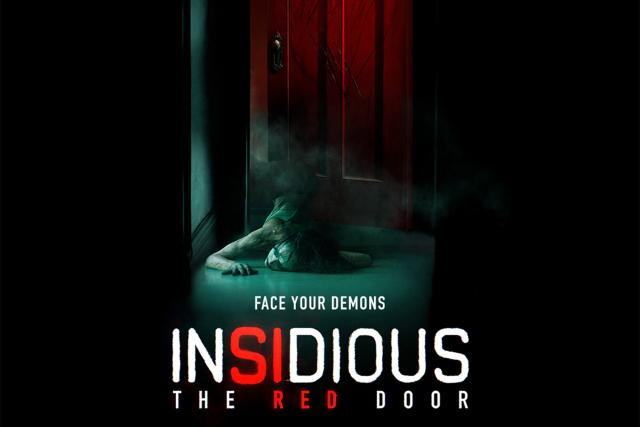
If there is one thing horror franchises hate, it is an ending. A genre built on numerous sequels, spin-offs, reboots isn’t one to be friendly to the idea of wrapping stories. However even if some doors still remain open, it is always an encouraging sign when one story seems to be given some closure. INSIDIOUS: THE RED DOOR may be the fifth installment in a franchise that began thirteen years ago, but it is also a nice bookend to a family suffering from demonic entities both externally and internally. It is the rare horror film that even if made ten years later is not a legacy sequel but instead a needed conclusion that fulfills its predecessors. It also manages to evoke many of those same fears that creators Leigh Whannell and James Wan delivered in their first super low budget outing that became a major hit grossing over a hundred million on a one million dollar budget. The Insidious franchise introduced us to the Lambert family as well as the further and horrifying paranormal entities such as the red lipstick monster. But what the Lambert trilogy (there are two other prequels focusing on other families) showed us that amongst all the ghastly creatures is a story of family love and specifically how fathers almost always pass down their suffering onto their sons.
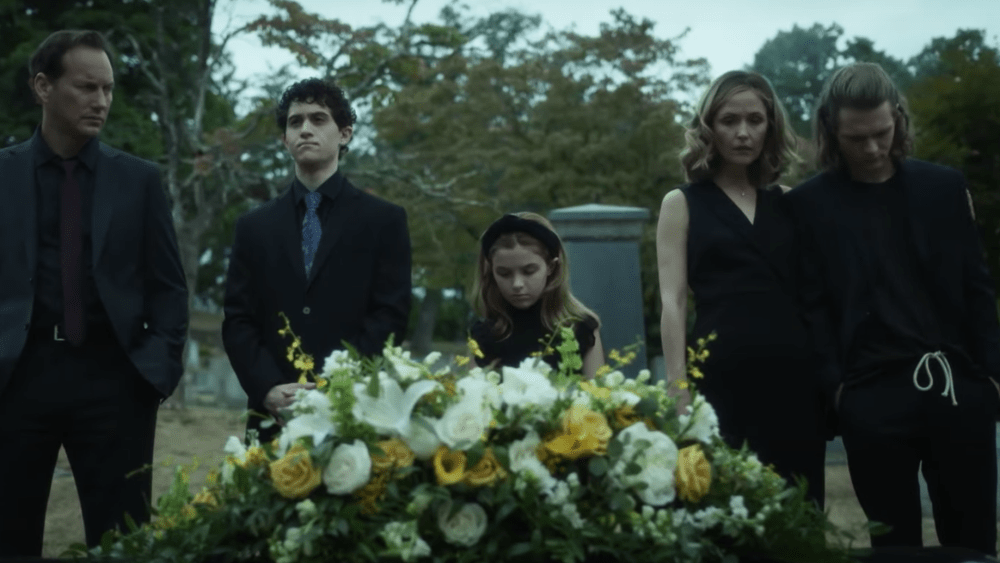
Ten years may have gone by for the Lambert family, but very little has been resolved. Dalton (Ty Simpkins) doesn’t remember the year he spent being hunted by an evil spirit as his body travelled into the paranormal world of “the further,” and his father Josh (Patrick Wilson) continues to repress these memories only getting small inklings over what he refers to as just brain fog. Josh is now divorced from Renai (Rose Byrne) and his mother has passed leaving his relationship with Dalton at your typical estranged father while both blame the divorce for their anger. For those who need a catching up, the last time we saw the Lambert family they believed to have figured out the murderous demon trying to obtain both Dalton and Josh’s spirit. All seemed safe and with the help of their family and a psychic the two men have their memories revoked and will only think back on this time as the year Dalton was in a coma. You don’t need to be a horror aficionado to know this is about as bad of an idea as you can get. Now with Dalton off to college and his father trying to reconnect with him old wounds are bursting at the seams.
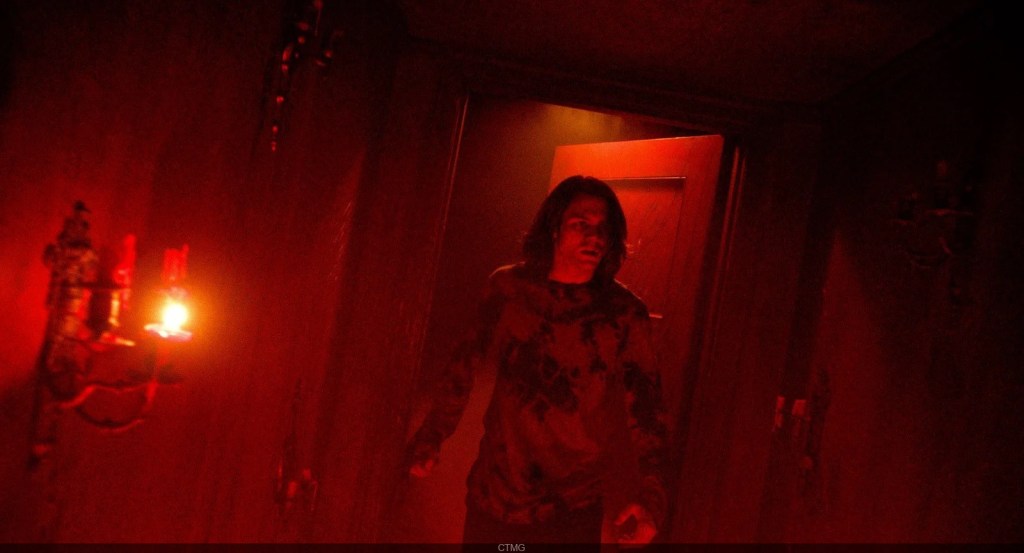
THE RED DOOR could have come off as a soft reboot, after all the cast, now ten years older, fits the legacy characters routine and having to re-remember the events of the first two films almost feels like an easy way to bring in new audiences. However the film’s strongest aspect is never forgetting that its sole purpose is to continue an ongoing story and not rehash everything that made the first and second successful. Wan is no longer behind the directors chair (nor was he for the prequels), but instead the film is also used as Patrick Wilson’s directorial debut. In previous years an actor stepping behind the camera to finish a familiar franchise was a sign of worrisome, but between this and Creed III (also this year) we are reminded of a time where actors directed not because of an easy outing but rather their passion for a story they’ve spent so many years in. Wilson’s love for the franchise is clear from the first moment and with his team of editors remind us of the constant dread that carry over these films. Thankfully though Wilson never tries to recreate the same frights that Wan delivered (a near impossible task). Instead the film delivers several truly terrifying sequences that begin in unfamiliar territory for its characters but eventually grow into comfortability that allows for a more adventurous tone.
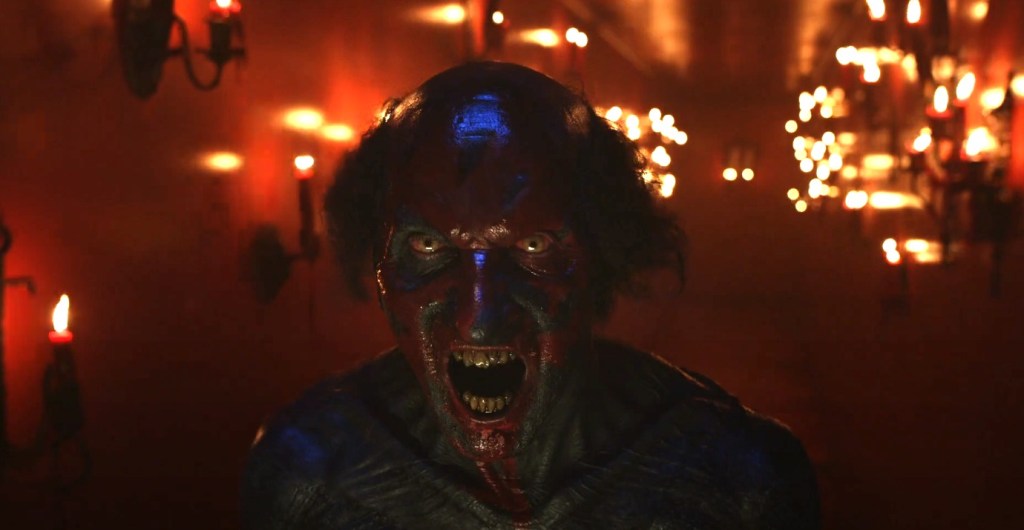
As Dalton’s college life begins, it is clear it is already a place that he is lost in. Attending an art school program Dalton has no interest in joining a fraternity, much to his father’s dismay, instead he paints obscure and macabre images that he can’t fully explain. He believes his family is hiding something and with the help of his new roommate (Sinclair Daniel) sets off to find answers. While Josh and Renai were the focus of the first two outings it is nice to see the direction turn on Dalton and Ty Simpkins is more than prepared. Simpkins, who held his own in last year’s melodrama “The Whale” may carry all the teen angst here, but as the film progresses and Dalton learns more about his past the film veers into an almost playful ghost story where Simpkins shines. Still carrying that childlike innocence Dalton’s first time back in the further is more comical than terrifying for all the right reasons. Scenes involving a frat house show that this franchise, while indebted to its terrifying origins still wants to grow and Wilson wants to have a little more fun. Not all these beats work and like most sequels finds itself in some conventional territory. One too many turn around jump scares occur in its middle and while Sinclair Daniel is great in her first film, her character is saddled with the same funny sidekick trope that can never escape the genre. But for all its faults THE RED DOOR has such love for its story and more importantly its characters that you are instantly won over all over again by the Lamberts.
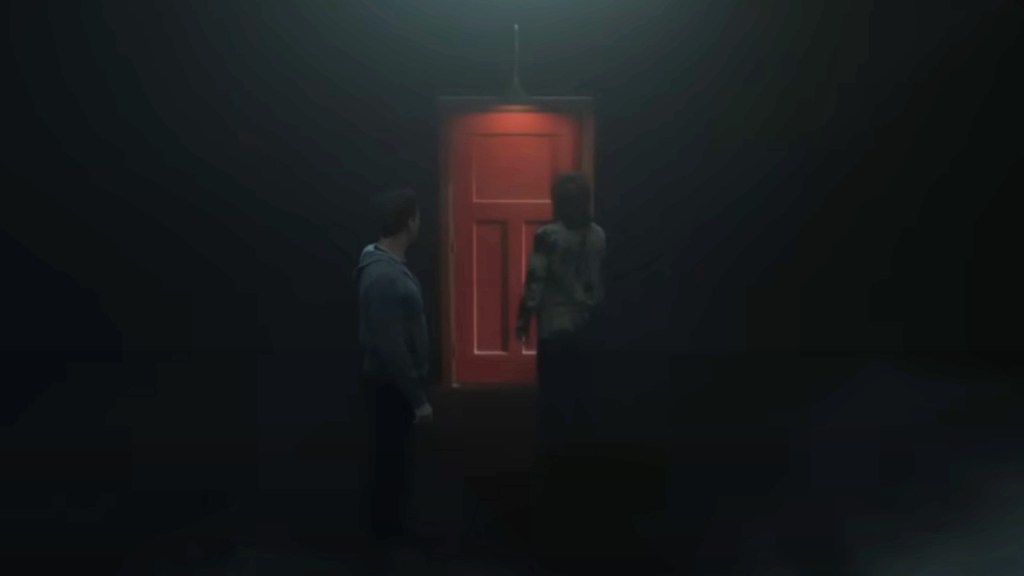
What makes THE RED DOOR one of the better horror sequels in recent memory is that it sets out to define the Lambert story as a saga and it succeeds in the best ways. After watching this film it begs repeat viewings of the first two films. It is not that these films can no longer stand on their own, but it doesn’t fear being one continuous story. It plays like your favorite one thousand page horror novel with a conclusion that is both satisfying and finite. The film moves into its main territory of Josh doing everything he can to avoid becoming his own father and Dalton realizing the man his father truly is and it is here that the film finds its most emotional beats. Rose Byrne may have a lot less to do in this outing (clearly a behind the scenes scheduling conflict) she still reminds us why she is one of the best working today. The weight on women in this franchise is not to be support systems for the men, but rather carry the burden that the men refuse to accept. Byrne delivers moments of pain that do not need any supernatural elements to show the horrors she has faced. And as Dalton and Josh’s investigations lead them closer you can’t help but wonder if the pain done onto Renai and her two other children can ever be undone.
By the time the final frame comes on you are finding yourself begging that this is the end, at least for the Lambert family. Sure there may be other stories to tell if you stretch it (which happens too often), but Wilson has directed such a needed ending that you cant help but wish other horror franchises knew to do the same. The “Insidious” films may not have told a perfect story, but it is one that is not only worth repeating it belongs to a time that may not exist anymore. Thankfully unlike Dalton and Josh we won’t forget any of it.
B+
INSIDIOUS: THE RED DOOR IS NOW IN THEATERS EVERYWHERE
 No assembly RequireD
Leave a comment