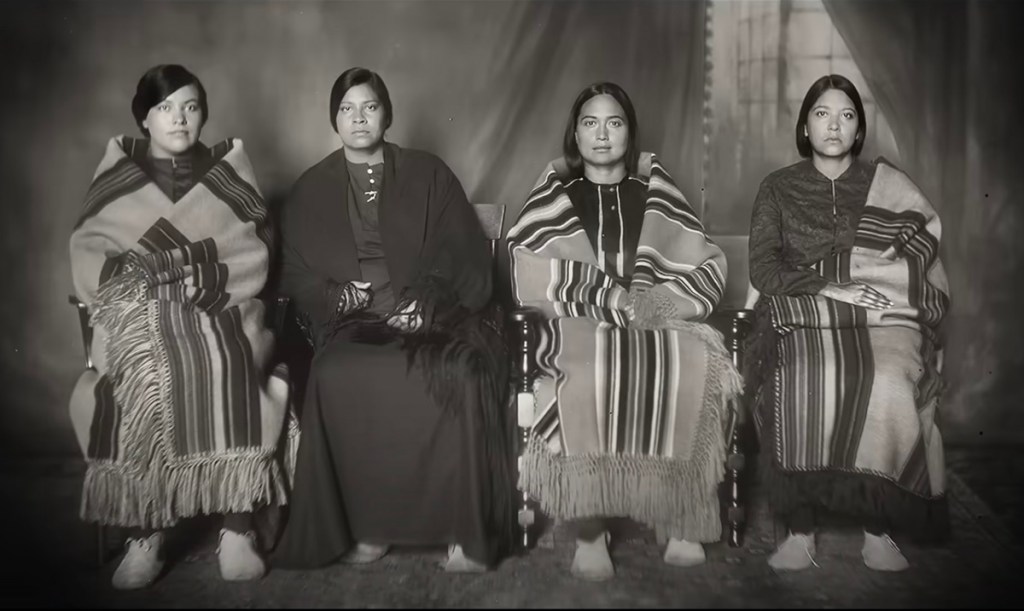

Martin Scorsese has always wanted to make a western. It has been in his cinematic blood probably longer than he can remember. Well actually scratch that knowing Scorsese from the thousands of interviews he has done he can probably tell you the exact moment the western came into his life. Above that he can tell you the exact film that brought it into his life, the theater he saw it at and the composition of the frame that redefined his life. And while many elements of what makes a proper and great western have come through many of his works, one can say that his latest KILLERS OF THE FLOWER MOON is a build up to the western that Scorsese has always envisioned even if its subject matter may seem far beyond his abilities. Abilities that many have considered at a genius level are still up to a challenge and this time around it is one of grand storytelling and limitations of what is the proper and respectful way to tell a story of unknown territory. The Osage Indian murders may not be known to everyone (thank your awful suburban or metropolitan education for that one), but they consisted of an atrocity in both American and world history were Osage Native Americans were murdered throughout the Osage County in Oklahoma during the 1910’s-1930’s. And while many came to light there were will still countless that went uncovered as well as no investigation. A tragedy of great proportions all designed and created through racism, hatred, corruption and pure American greed. Themes that are often portrayed throughout Scorsese films, but one would not be wrong in being apprehensive in how a white filmmaker and a white co-screenwriter (Eric Roth) would adapt the book of the same name by David Grann. A book mind you that focused less on the livelihood of the Osage people and more on the FBI agent Tom White who led the investigation. Thankfully Scorsese a filmmaker most often dedicated to the respectfulness of his subjects has done the best of his abilities and limitations to tell this harrowing story on a level that no other current filmmaker can achieve. KILLERS is a film that never moves too far away from the tribute it wants to give to the victims and present day Osage people who may or may not see this story as a jumping off point for many non-natives. A film staggering at the bits with pain and deceit that there is never a moment (thankfully) where you feel the entertainment overvalues the issues at hand. Devastating in its filmmaking, respectful in its portrayal, here is a film of what happens when compliance to hatred goes unpunished all told by a master filmmaker.
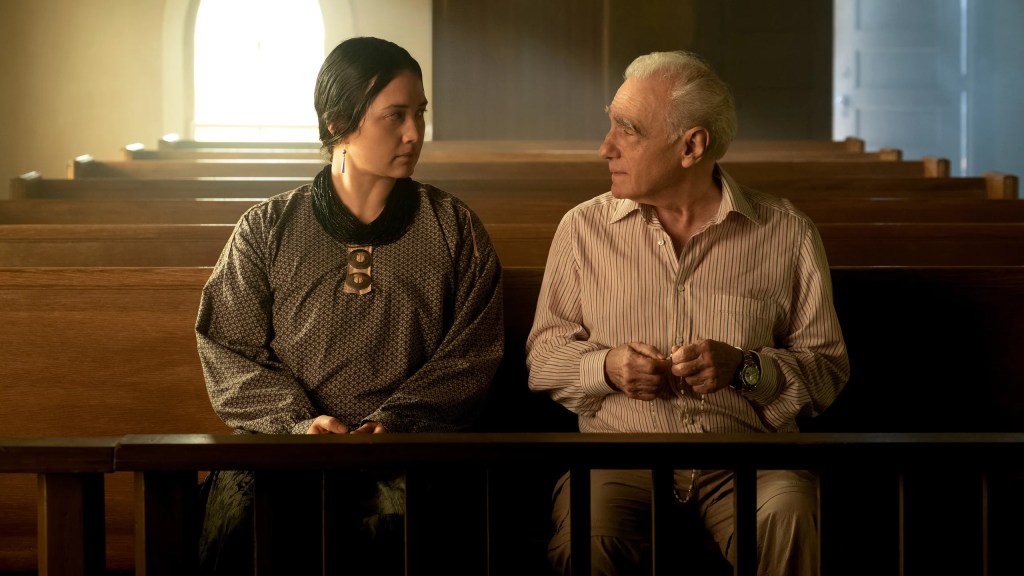
The Osage people are being forced to move on. When this three and a half hour epic opens, we are already brought into a time of great pain. As its Chief leader proclaims, they must now move away and bury their past as the lives their children will know and be taught is that of the white men. Instantly KILLERS is restfully giving us no choice but to look at the torment brought upon the Osage when the uninvited burst their way onto their land. And while the film quickly teaches us that this is due to the newfound oil on the Oklahoma Osage County there is still the notion that oil or not white invaders would still find their way to upend their lives. KILLERS can be a whiplash of a film however, because while we know discovering oil means the end of ownership, the film with expert editor Thelma Schoonmaker (now in her twenty first feature with Scorsese) thrusts us into a happier more successful time for the Osage people consisting of old time stylist photos mixed with Robbie Robertson’s twangy hard rock score (Robertson who past this year delivers his final score with this film). We also learn that the Osage people are now the wealthiest people per capita as they bask in their riches through beautiful cars, clothes, jewelry and much more. It is an exciting time both for them and the film that is cut all too short by the arrival of Ernest Burkhart (Leonardo DiCaprio) a World War I veteran with a blown up gut and even more damaged teeth. Back in his hometown Ernest has arrived to work with his brother and for their Uncle William Hale (Robert DeNiro) who is known around these parts as “king,” and that is because that’s what he asks to be called. From the moment Ernest, his brother Byron (Scott Shepard) and William step on screen you know the safety of everyone has been long gone. Ernest is not the disruption to the peace, but yet another destroyer. That destruction has been going on for a long time as we meet Mollie Kyle (a tremendous Lily Gladstone) one of four sisters of the Kyle family. Mollie in usual but always exciting Scorsese fashion lets us know through voice overs that many Osage murders have occurred but with no investigation. And while these murders may be the backdrop KILLERS throughout its entirety shines a light on the ongoing events through the lens of a marriage full of lies, deceit and hatred.
This review could go on forever detailing every masterful decision done by Scorsese and his crew but for the sake of time and everyone’s patience lets break down KILLERS OF THE FLOWER MOON in a spoiler free, but mindful observation.
-LILY GLADSTONE’S TIME IS NOW

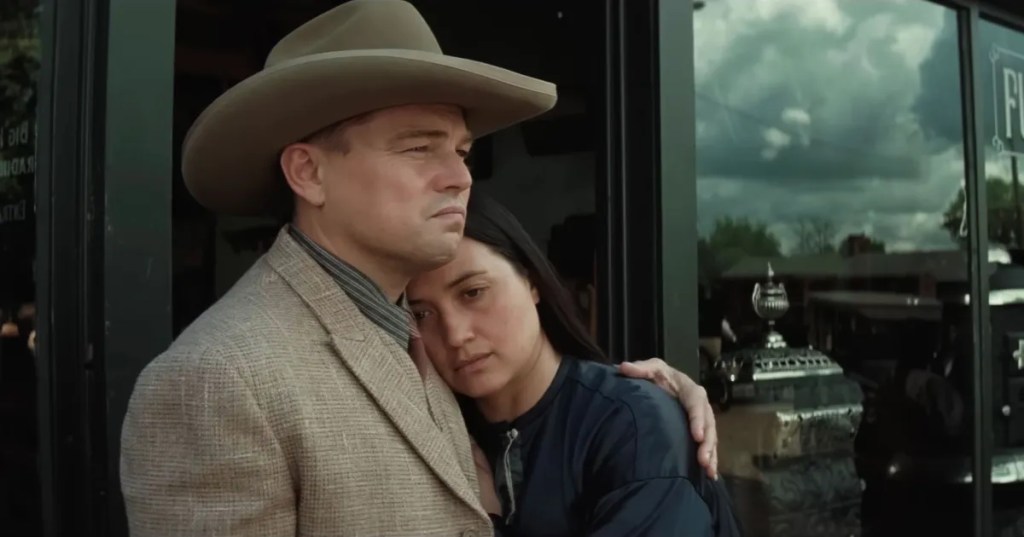
While much may be talked about on both DiCaprio and DeNiro continuing their filmography friendship with Scorsese this film is all about Lily Gladstone. Gladstone is as tender as she is remarkable in a role that requires as much patience as it does tenacity. Gladstone as Mollie brings a pain that for better or worse becomes the overall voice of the Osage people of that time. Watching her not go toe to toe with DiCaprio but rather continuously make him match her level even when put in scenes that require her to be dangerously vulnerable is such an exciting and heartbreaking thing to witness. The film knows the love between Mollie and Ernest is far from real and truthful especially in Ernest’s actions but Gladstone brings such pain and strength to a woman who may know the truth but continues to be let down after giving her husband multiple chances to come clean. Gladstone as Mollie never plays her dumb or unknowing but instead chooses to be resilient in her love for family and her people while also still wanting and needing the truth even if the love is long gone.
-SCORSESE’S CRIME SAGA
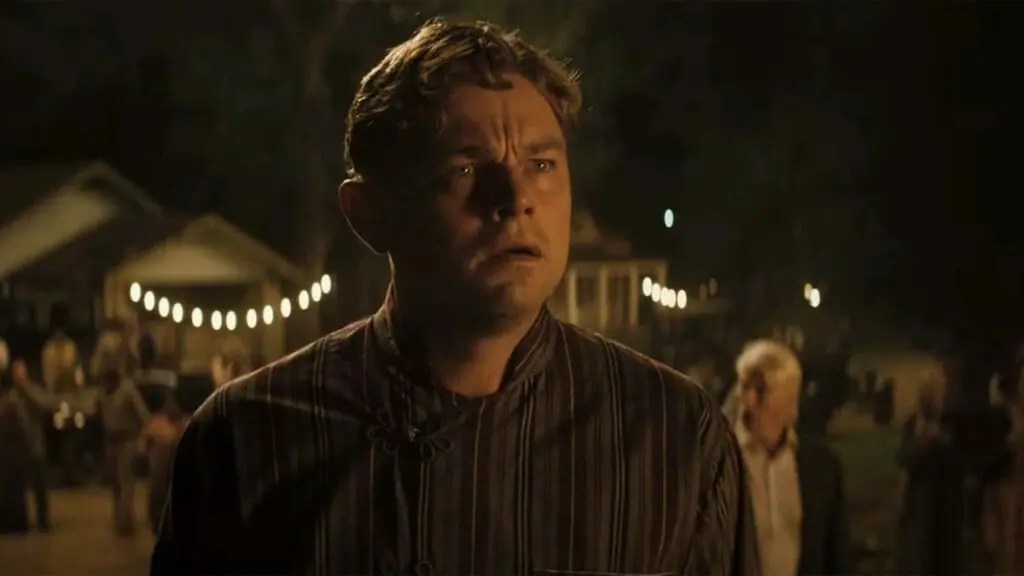
While it is hard to not associate Scorsese with crime dramas that is never a bad thing. His previous film “The Irishman” may have felt like a goodbye to the genre, but KILLERS is instead a revamp of the stylistic films that created the master filmmaker. A longer runtime means Scorsese is able to blend the genres his cherishes most and brings this film of tragedy into a crime epic not to disrespect the subjects, but rather tell the story in a way someone who is non-native can tell it. In doing this through a crime story the film is able to show how far these men were willing to go to keep their atrocities hidden even if they know the law is right on their tail. The film itself is practically a mockery of the law as DeNiro’s performance as Hale sees no threat from law enforcement nor does he believe it can go far once people begin to get caught. The film may venture into familiar Scorsese territory but boy does it show that the filmmaker has never lost touch with his roots and still knows how to make them fresh fifty years later.
-ROBBIE ROBERTSON’S SCORE, AN UNDERTONE OF DREAD
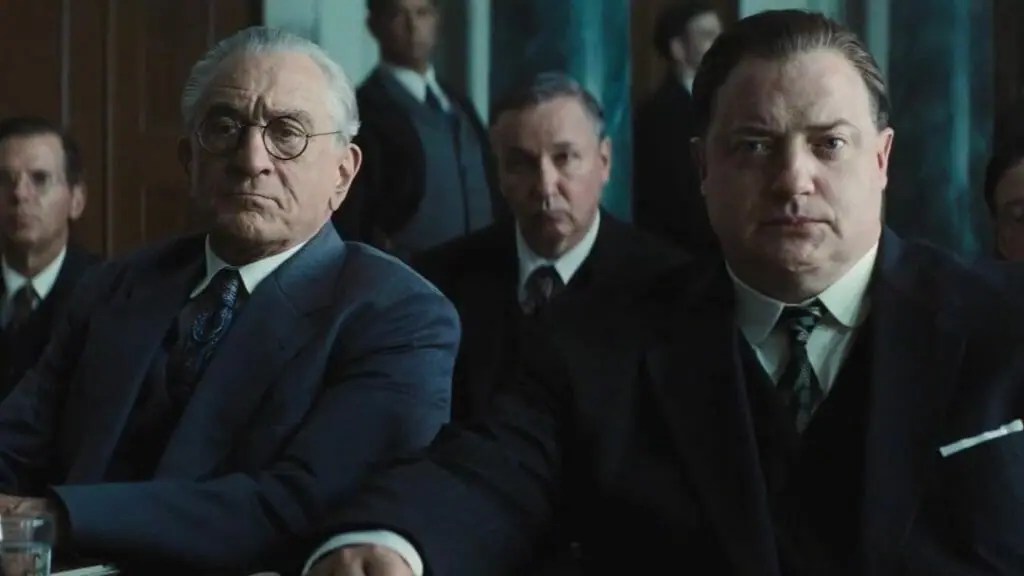
There will be plenty of technical praise for the film (as their should be), but one thing that should not go unnoticed is the late and great Robertson’s brooding score that becomes an undertone for the pain and destruction that occurs onto the Osage people. While Robertson’s score brings forth some guitar swing in its early moments, once the film gets into its more middle section there is this never ending bass and soft guitar that feels as creeping as the men’s plot to kill the Osage. It is less used as a prop and more an effective piece to an already uncomfortable puzzle. Some segments of music go on for as long as thirty minutes (broken up at times), but in doing so carries the film at a breezier pace all while displaying these actions of hatred.
-OSAGE AND RESPECT TO PARTS UNKNOWN
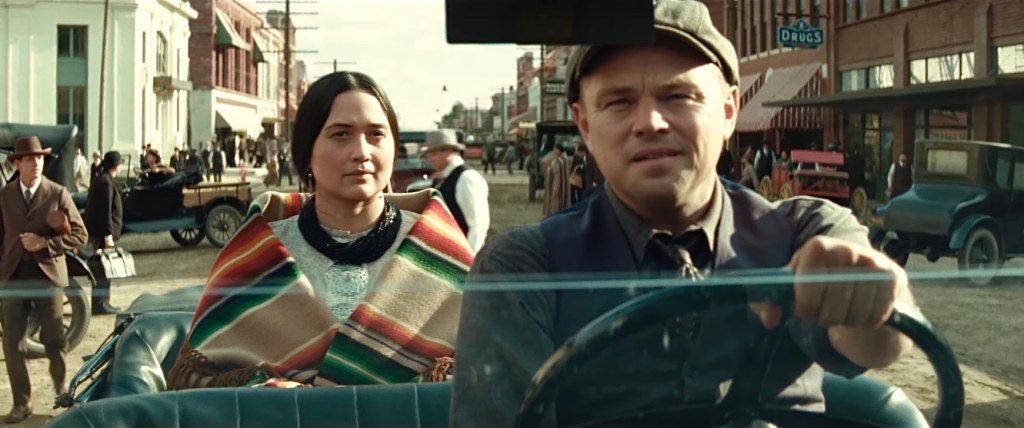
It ha been stated before that Scorsese and Roth were dealing with unfamiliar areas. The film moving away from focusing solely on Tom White allows KILLERS to be a proper enough tribute to a group of people that have had decades of torment brought onto them. It also doesn’t allow this film to be just an endless cycle of torture. With a cast made fifty percent of Indigenous actors including Gladstone, Tantoo Cardinal, Cara Jade Myers, Janae Collins, Jillian Dion, William Belleau, Tatanka Means, and even Yancey Red Corn the film never sidelines any of its Native actors. Instead it reinforces their presence as with Schoonmaker’s editing allows for their faces and performances to continue on long after some of their respected characters are killed. None of them are a backdrop to the story of Ernest or William Hale, and even as the film ventures into scenes without them it always finds its way back to paying respect and honoring those lost.
-FBI AND ONGOING PROPOGANDA
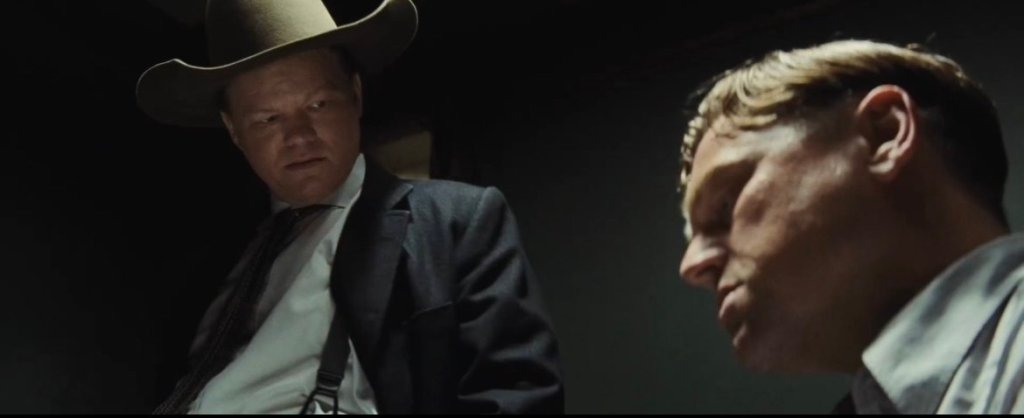
The film, originally meant to be focused more on the creation of the F.B.I. due to White’s investigation is still seen as yet another evil brought onto Native land. There may be some exciting moments of old school cops and robbers, but there is never a doubt that the FBIs presence is as uncompassionate as it is not thorough. While they may be excited to catch the killers, many of the investigators language towards the case speaks of seeing the Osage not as people but evidence. Referring to them as “it” or not showing scenes of them inquiring with Osage community members speaks louder than any arrest they make. It also alludes to a horrifying near final segment that shows the real reasoning for their involvement involving capitalizing of tragedy for pure entertainment.
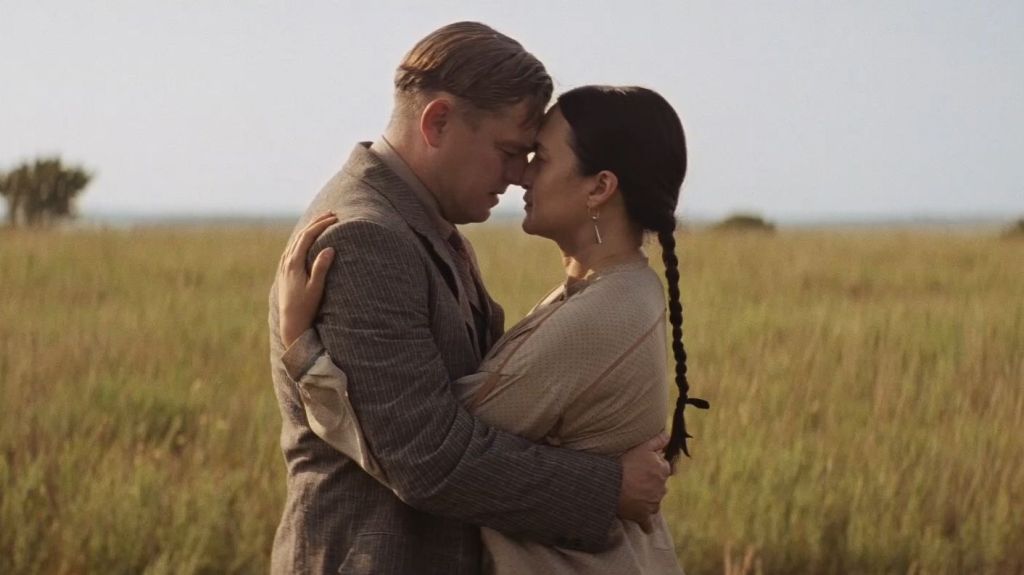
KILLERS OF THE FLOWER MOON is not just another masterful film to put in your Scorsese letterboxd list, but instead a film that can be a turning point for many to look at their own compliance to hatred and racism. And while there are so many of us who would like to quickly say they play no role; the film still asks us to double check those beliefs. This critic specifically can’t speak on the opinions of the film by Osage members (but highly seek them out), but the film that is given is one that appears to be based in great respect, admiration and continuous support of both Osage and other Native tribes whose history continuous to be erased by false education and resistance. A film that can be celebrated but more importantly discussed and followed through. Martin Scorsese may have finally gotten his western, but in doing so has reminded us the value of what great cinema can give to us when we stop and take the needed time to listen.
A
KILLERS OF THE FLOWER MOON IS IN THEATERS EVERYWHERE
 No assembly RequireD
Leave a comment