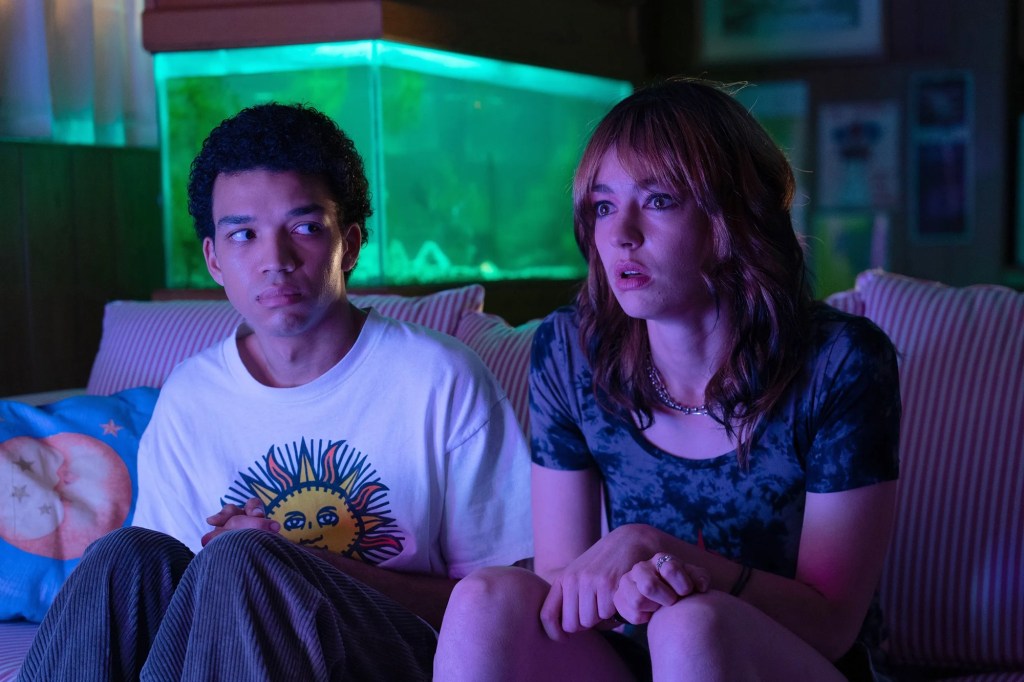
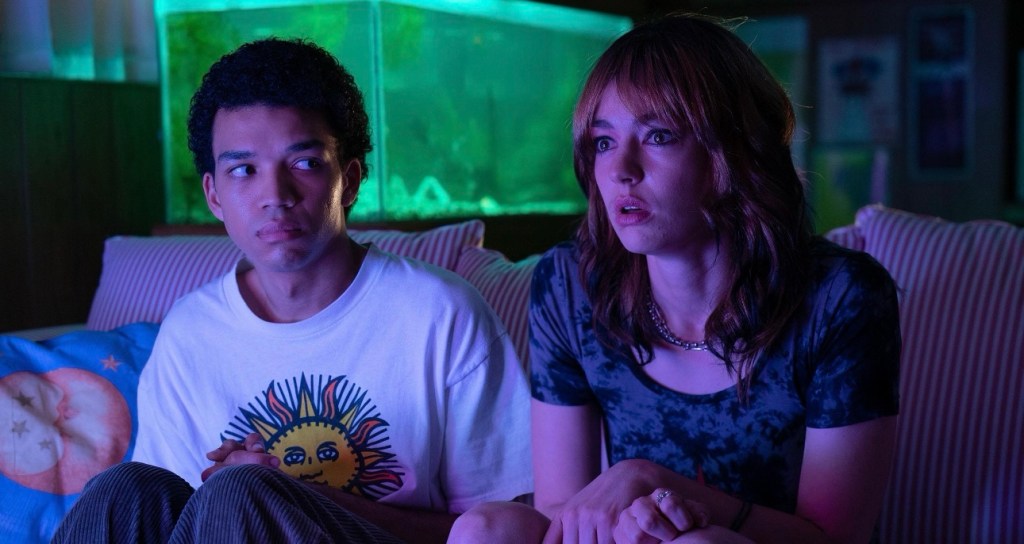
There is no way we can ever truly revisit our childhood. Our memories of the past no matter how significant will always be blinded by years of experience and the inability to fully grasp that inner child. It may seem bleak but perhaps that is one of the greatest joys of youth. This other worldly experience in our life that feels beyond space and time. The latest film from Jane Schoenbrun is not just a cosmic realm of childhood existence and childhood forgotten, it appears to be the director at their most personal releasing a dreamscape of the transgender experience. Schoenbrun displayed this with their first narrative, “We’re All Going to the World’s Fair,” a micro-budget film immersed in the online world of creepypasta and sensitive ASMR. It was a film that showed Schoenbrun has the ability to be a once in a generational talent, I SAW THE TV GLOW confirms it beyond any question. A director that has such a strong hand on every scene of their film that you find yourself never needing to look for the bigger ideas at large because everything is right in front of you. A film filled with larger than life ideas and characters that dominate every inch of the frame but all still managing to feel homed in to that micro budget filmmaking style infused by Schoenbrun. This is also a film for anyone who grew up with a passion, a secret and an escape that only they felt truly belonged to, and even when finding someone to share it with there is still the presence of being terrified to display your true self to anyone else in fear of ridicule or worse unacceptance. A film that (and no part of me says this lightly) can and will save lives for so many straddled to mundane suburban life discovering who they truly are while avoiding the hardships that keep them locked inside. I SAW THE TV GLOW knows that for anyone needing to find themselves there is another world right on the other side of a brightly lit television set calling them their true names asking for them to join inside before the static wipes them away.

Owen doesn’t want to speak up. A timid Black teenager, Owen is played by Justice Smith in a performance that will span over many years first starting in 1996. (His 96’ portrayal is by Ian Foreman). Owen mumbles his words but he is able to let us know that he has recently started re-watching a childhood favorite show called “The Pink Opaque.” To describe “The Pink Opaque” is to ask you to return to the childhood era of “Don’t Look Under the Bed,” “Goosebumps,” “Buffy the Vampire Slayer” and even a little bit of “Power Rangers,” and “Wishbone.” In other words return to a time where children shows were endearing but very fucked up. Shows that taught us lessons, but also left us terrified with images that have stayed with us for our whole lives. Shows that we could swear once existed in just memories but their existence is confirmed when we share a tale over a drunken night at a village bar and bump into someone who also remembers the show. But for the time being Owen’s memories of watching “The Pink Opaque” are brought back to 1996 where his seventh grade self meets Maddy (a phenomenal Brigette Lundy-Paine) a ninth grade extrovert who is obsessed with “The Pink Opaque.” It is her favorite show ever and to Maddy this show means sanctuary. Owen in his sheltered life is introduced to “The Pink Opaque” the same way many sheltered kids saw their first episode of something like “InuYasha;” in secret and in amazement. Owen is overtaken by this strange show following two young girls Tara and Isabel (Lindsey Jordan and Helena Howard respectively) who meet at a summer camp and realize they have supernatural abilities to fight the evil Mr. Melancholy and his henchwoman of demonic twins. But as the years pass and a strange disappearance of Maddy occurs Owen is left to re-discover both themselves and the show. To some the premise may feel straight out of a lesser John Green novel, but thankfully Schoenbrun knows that their film is based on memories that feel so exact and yet have a way to touch their audience evoking their own times of finding safety in a glowing television screen. The show within the film and all its images can be disturbing, but to the generation that grew up with them there is that strong connection the film is able to recreate. Whatever your own Pink Opaque was there is an instant throwback to when the most bizarre of tv shows felt comforting not just for its content but rather allowing a young person to feel fully like themselves for only a moment. Schoenbrun also uses these memories to the film’s advantage evoking the fear we all felt perhaps when we saw that crescent moon face McDonalds marketing campaign (if you know you know), or even the otherworldly feel of blasting off to Toonami or experiencing your first sexual awakening during an episode of “Charmed” or “Buffy the Vampire Slayer.” Eric Yue’s cinematography with its neon and very pink driven essence feels like the emotions Owen and Maddy carry as their favorite show guides them through the halls of their high school as they never speak to one another but rather secretly share episodes of “The Pink Opaque” to one another. It’s a beautiful friendship riddled in shared agony and comforting bizarre children’s media.
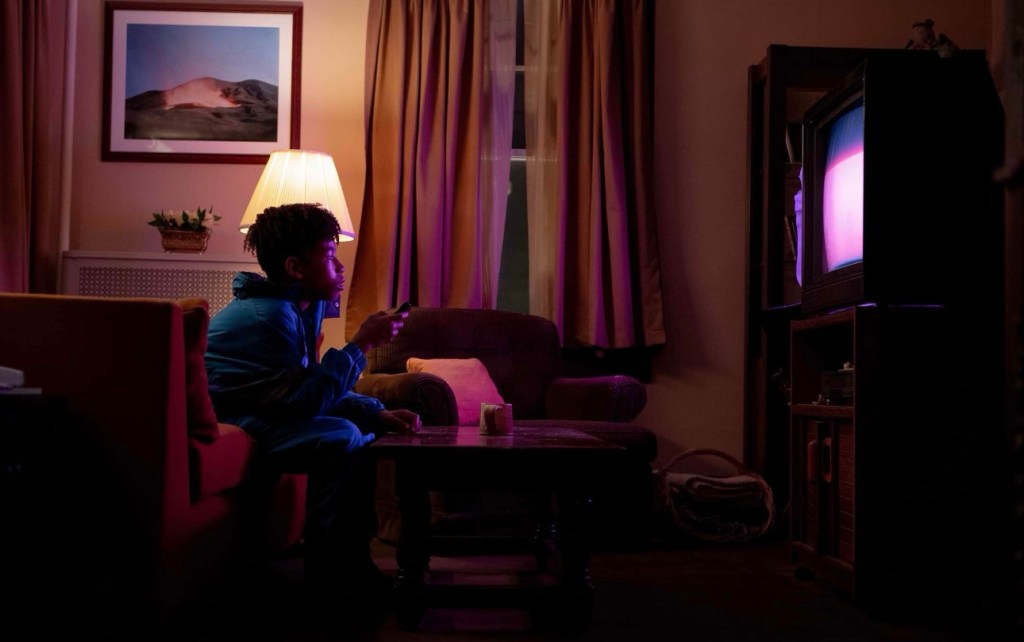
While some films try to be overtly clever with their analogies (and often fall short) I SAW THE TV GLOW never tries to trick its audience. It is a film that will ignite after screening discussion but one thing is certain, this is a film of trans ideologies and emotions. A film openly inviting the queer community both on and off screen, it is an extraordinary display of the mundane life many young suburban kids felt knowing they live in fear to be their true self. Whether it be family situations or fear of ridicule from your peers, TV GLOW knows the difficulty of open transition. Maddy in her disappearance and possible reappearance is displayed through Lundy-Paine’s devastating but exceptional performance of a person who must die and be reborn again to be their true selves. There have been several strong trans films involving life in the bigger cities, TV GLOW instead basks in its suburban setting (the film shot in the suburbs of New Jersey) from its backyards all merging into one, to the New Jersey staples including amusement parks and a very local music hot spot. In fact for this New Jersey critic their mind exploded when a local Asbury Park music joint (shoutout The Saint) was used for a pivotal scene that greatly evoked not just Twin Peaks but rather Twin Peaks: The Return. All these places speak to Maddy both through pain and safety. But a change of setting has to happen for Maddy and the suburbs greatly show how life can be at such a standstill and feel all too comfortable for everyone but those in pain. Schoenbrun, who is from their own suburbs of Ardsley New York, knows that all can be lost in suburban life and those pleasant memories can be corrupted greatly over time. As Owen and Maddy look back on their time as young teenagers together it becomes apparent for both Owen and the film that this is a story of not just awakening, but regret and the discomfort that comes from not being yourself to appease others. To see the two sides of roads taken from both Maddy and Owen is heartbreaking but brought to such a stunning display from two young performers fully engaged. Lundy-Paine with the monologue of the decade holds the audiences’ attention and knows this may be their one shot at explaining the true essence that comes from knowing you are not what others see you to be or worse want you to be, while Smith feels on the verge of finally escaping to become themselves but continuously finds themselves stuck. It is a tough line to walk and Smith is more than up for it that by the time its abrupt conclusion arises you feel terrified for what has occurred and what may never happen for someone who deserves self-love.
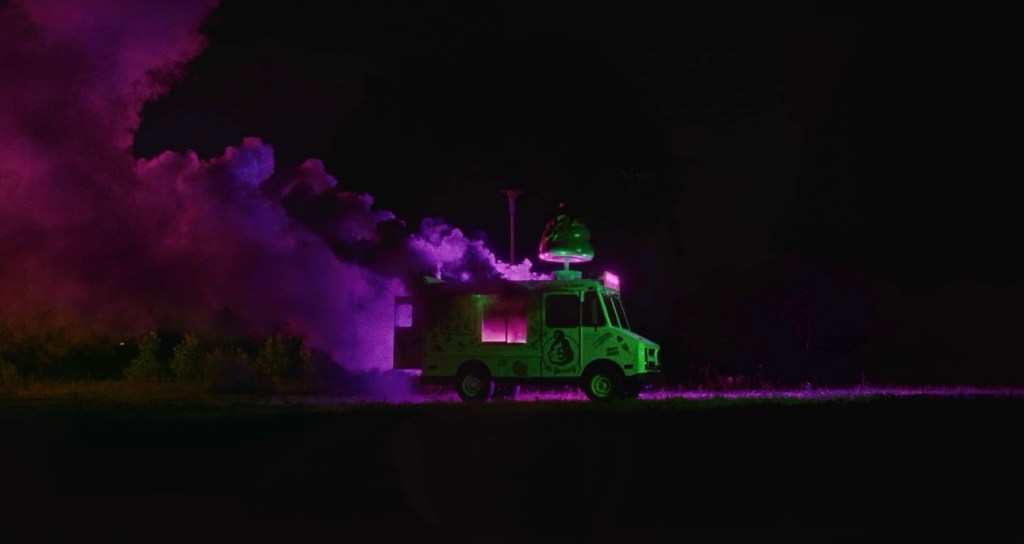
I SAW THE TV GLOW does not want to keep tricks up its sleeve but rather it wants to show every element it has going for on screen for you to see and even more so hear. With sound design that feels between different realms all guided by a soundtrack that actually feels authentic to the teenage years of discovering that indie band beforeo anyone else does. The soundtrack much like “The Pink Opaque” becomes a secret the audience gets to have listening to lesser known artists that still carry a distinct voice of their own. Artists such as Caroline Polachek whose song “Starburned and Unkissed” becomes a rock ballad capturing the films youthful dreamlike state that also feels like a cry to shout into the void as she belts out lyrics such as “My heart’s a ghost limb reaching.” Schoenbrun has assembled an array of artists (and even includes a wonderful cameo from a well known female singer in the alternative world) that shows their dedication to making sure every instance of this film feels genuine. It is just one of the many pieces of this film that causes it to feel like a perfect encapsulation of a generation who has been forced to move forward but appears to be (with this film) reaching out with open arms to comfort those younger that may be lost and scared or uncertain on how and when to display themselves. I SAW THE TV GLOW may find its way to a rather upsetting ending that may be beyond a happy ending of change, but it knows it never has to be this way for everyone. Instead they can use their powers given to them by the Pink Opaque and fight off any melancholy to show that when reborn to the person you truly are the cosmos open up and we can enter into that glowing television set before anyone else has the chance to change the channel. And best of all the show we loved all those years is just as beautiful as when we first started watching.
A+
I SAW THE TV GLOW IS NOW PLAYING IN NY/LA AND WILL OPEN NATIONWIDE FROM A24 ON MAY 17
 No assembly RequireD
Leave a comment