
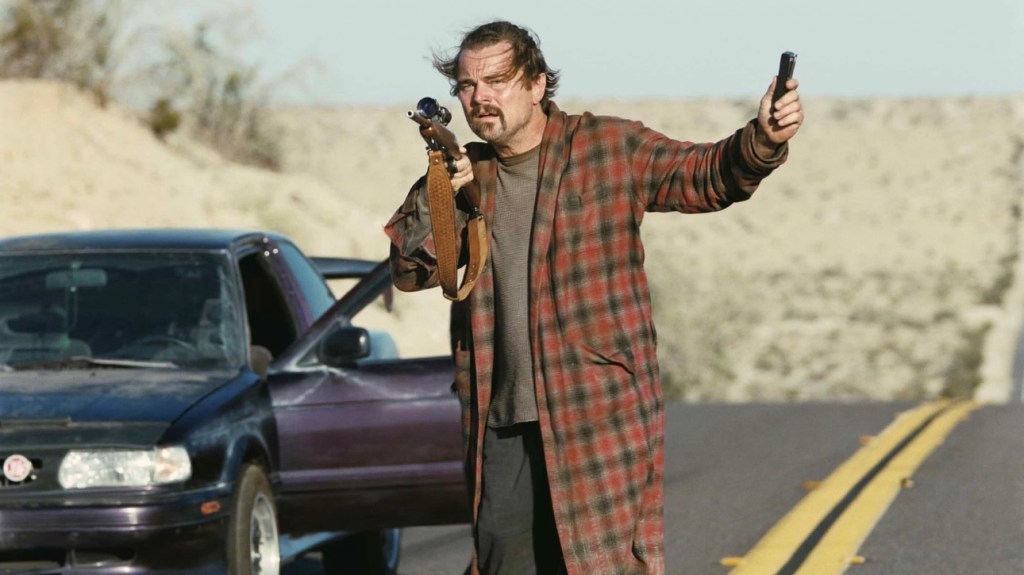
Paul Thomas Anderson is a rebel. The now soft spoken yet one time chaotic disrupter of late 90’s cinema has always pushed back on the status quo of what others may call elitists filmmakers. Anderson himself has often been associated with arthouse critically acclaimed films that often the mass appeal seems limited. However if one truly looked at his body of work you’d see yes, an auteur in every sense of the word, but also a pure entertainer never allowing himself to feel above, even though the argument is more than valid. After all this is the man who dropped out of film school when his professor insulted “Terminator 2” seeing that not only was it a film he loved but also the realization that the divide between acclaimed and commercial was growing too wide. And while Anderson’s films have never skyrocketed up the box office (his highest grossing film at $76 million), Anderson continues to deliver a mass appeal if audiences are willing to give in. As many know often that appeal is filled to the brim with cinephiles packing in the AMC Lincoln Square theaters or the New Beverly. But with this Anderson still remains a rebel to his admirers. A man who came onto the scene in his mid-twenties and delivered an early second film both praising and damning the film industry has found himself nearly thirty years later delivering a new body of work that is as defiant as it is entertaining. ONE BATTLE AFTER ANOTHER is what you’d call, “the movie of the moment” a film that doesn’t conveniently or coincidental come out at the right time but one that plows through to make sure it comes out right when it is beyond necessary. A politically defiant film that sets off like a rocket sent to destroy the corporate and deadly powers that be while never limiting itself below crowd pleaser. In a time when even the slightest mention of resistance is met with brutal hostility and simply asking for compassion is met with a gun in your face, ONE BATTLE AFTER ANOTHER somehow (and brilliantly) manages to assure you that things can work out while also keeping you aware and deeply concerned. It is also just Paul Thomas Anderson going above and beyond to impress with an nonstop exhilarating ride of violence, betrayal, resistance and through and through pure love. It may have taken its time getting here and you may lose your hair trying to get that 70mm or Vista Vision ticket, but ONE BATTLE AFTER ANOTHER proves it is more than ready for the fight.
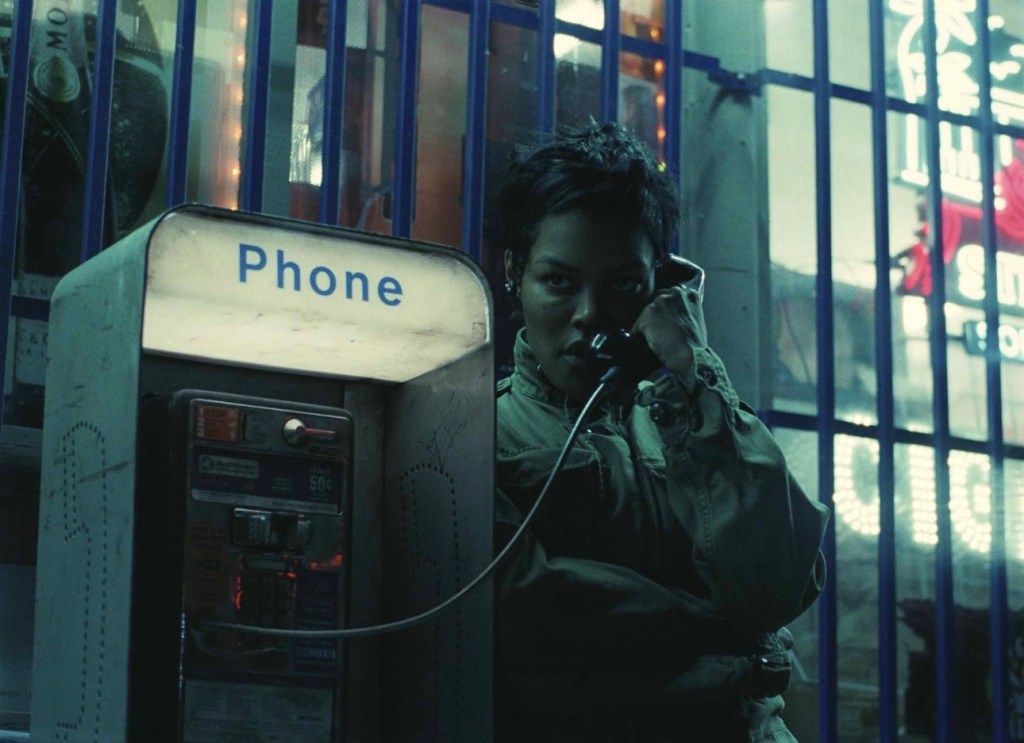
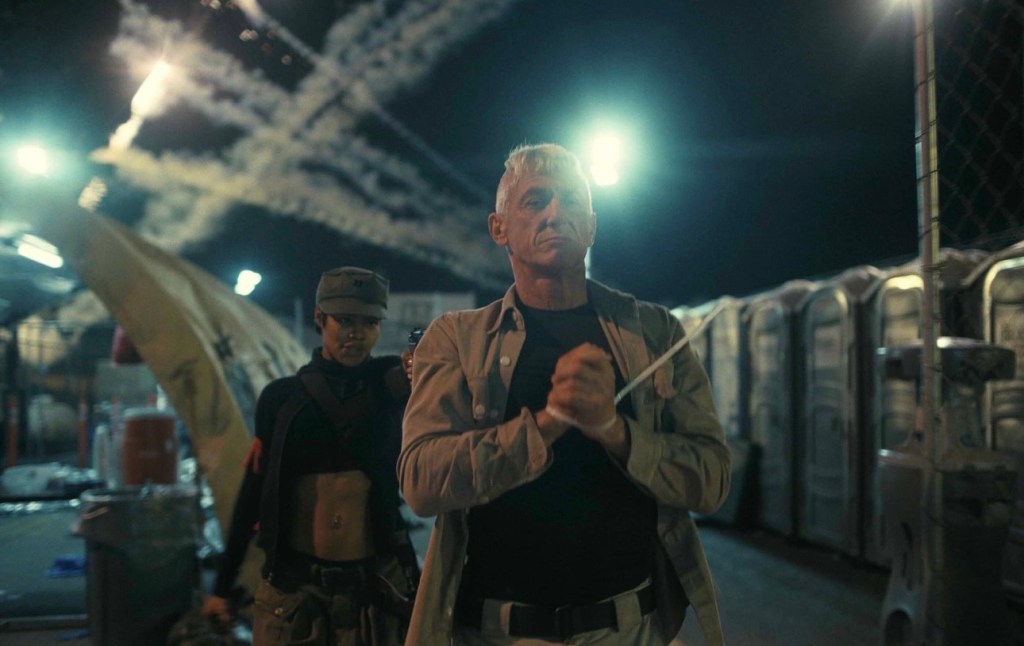
A novel of a film ONE BATTLE AFTER ANOTHER begins with a prologue, unbeknownst to the audience, as we are introduced to the French 75, a revolutionary group set on destroying oppressed and violent systems such as immigrant detainee centers, banks, political offices and more. The French 75’s members sometimes enter coyly but often ensue an explosive manner both through actual bombs and their rampage attitude allowing their enemies to know of the despicable manner in which they have operated and destroyed so many. For many this is a whole cause, but for Perfidia Beverly Hills (an electric Teyana Taylor) the fight is much larger and deeply personal. While her specifics are never directly mentioned Perfidia’s sense of control over the situation seems to always dominate the strategic planning of her other members including her partner “Ghetto” Pat Calhoun (Leonardo DiCaprio), a bombs expertise. For Calhoun the fight is his life until his life expands in the form of a daughter he shares with Perfidia. But being a revolutionary has its enemies. During a routine detainee extraction, before her daughter was born, Perfidia encountered the ruthless Colonel Steven J. Lockjaw (Sean Penn) and while simply tying him up at gunpoint could suffice Perfidia engages in a sexual humiliation of Lockjaw that is both humorous and indicative of the way many racist white men truly find a self-pleasure in being victimized by their own perceived enemies. What seemed like violent roleplay sets off a chain of events and fascination for Lockjaw of Perfidia causing him to track her down and when a bank robbery goes wrong Perfidia finds herself not just in the arms of the law, but Lockjaw himself allowing her a way out for the price of being “a rat.” And even with what seems like an easy on paper villain nothing can prepare the senses for what Sean Penn delivers as Lockjaw. It is a performance for a respected if not peculiar career that demonstrates the magnitude of Penn’s abilities right down to the physicality expressed in ways that is not normal for one man. Lockjaw doesn’t just act unusual he damn near walks like someone who has never taken their first steps before. Built and dressed like a G.I. Joe figure Lockjaw maneuvers with one foot hovering in the air while the other tries to land as if he himself is a toy being operated by a young and naïve kid. The groggy voice and the eyes that always scream desire for Perfidia allows Lockjaw to be not just terrifying but absurd to a fashion that you can only find yourself believing every motion.
Calhoun now on the run with his daughter and their names changed to Bob and Willa, ONE BATTLE AFTER ANOTHER aggressively sets the stage as it runs through what happens to any rebel in a world where winning against oppressors is often met with harsh reality. Thomas Anderson never sees this early prolonged segment as just a prologue however as both his directing and Teyana’s devastating performance is one of both aggression, power and loss. It creates a familiar world where winning cannot be possible but is often due to radicals themselves eventually betraying their own cause. This isn’t to label Perfidia as a mere enemy and betrayer but rather a defiant never fully knowing their own cause or at least the full ramifications of their own obsession.
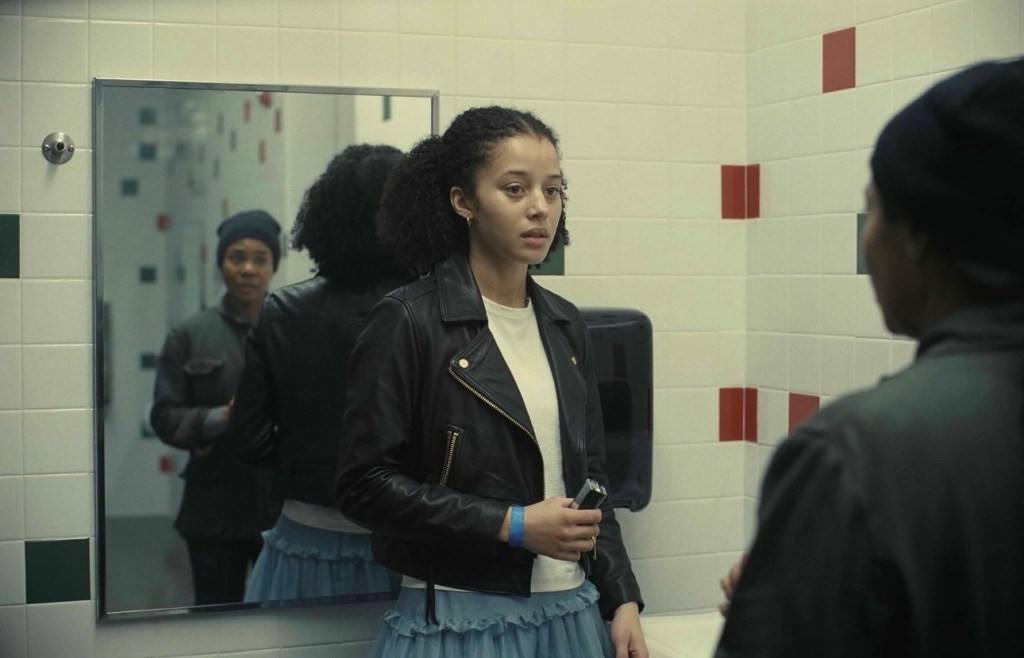
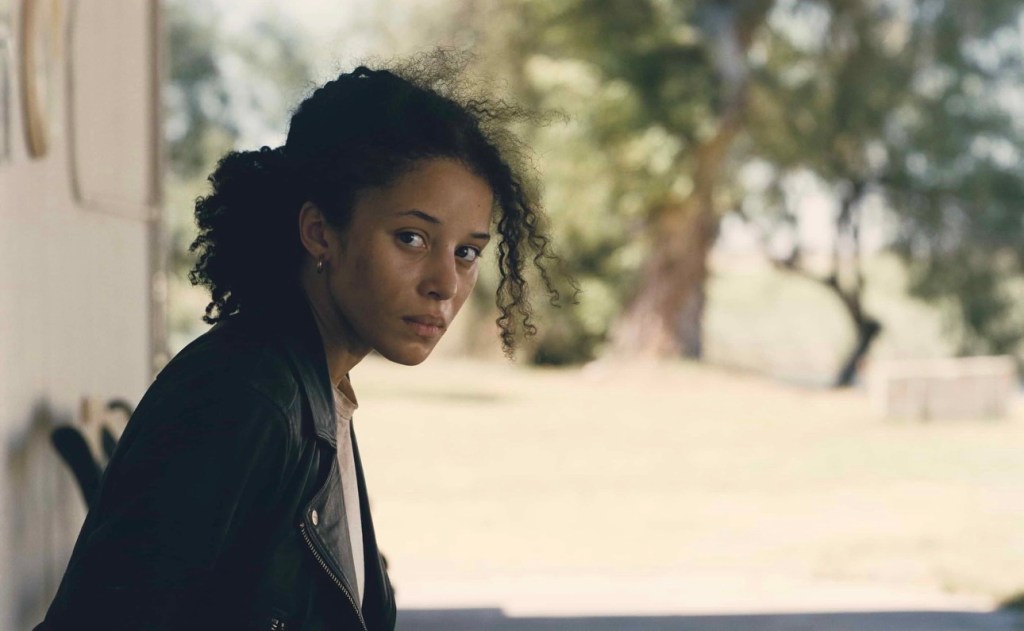
But even with being off the grid for sixteen years, the past always comes back. Now a burnt out basketcase, Bob spends his days paranoid (the weed doesn’t help) for his and mostly his daughter’s safety. Willa (Chase Infiniti) a sixteen year old rebel in her own mind finds comfort in learning Karate and less comfort in taking care of her once rebellious father. DiCaprio and Infiniti carry most of the genuine heartfelt moments of the film allowing for a brand new star (this is Infiniti’s first film and second project after HBO’s “Presumed Innocent”) to go toe to toe with one of Hollywood’s most prolific icons. Willa has the wit to match Bob’s aggression but it also isn’t hard when Bob, like many rebels of the past, has slowly morphed into conservative dad. This is not to say Bob would ever be caught dead going against his humanitarian beliefs but PTA is clearly poking fun at himself that every rebel after becoming a parent gets a little more like their own crew cut wearing fathers.
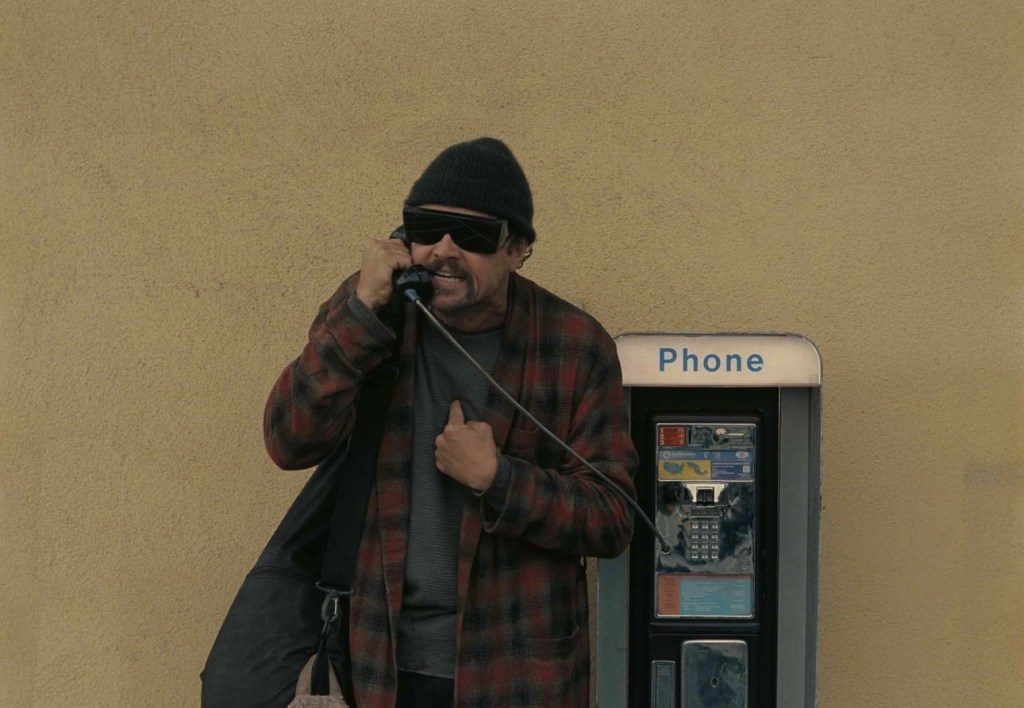
But Willa is trained and taught the fears of the world which has now once again reached her doorstep. Lockjaw has never stopped especially not after Perfidia escaped witness protection and he himself is trying to enter The Christmas Adventurers Club, a shady club that has no issues discussing their hatred for Black people and immigrants. Hellbent on creating a “pure” world Lockjaw must erase any indications that he is nothing less than a pure white American and the existence of both Willa and Bob certainly keep that at bay.
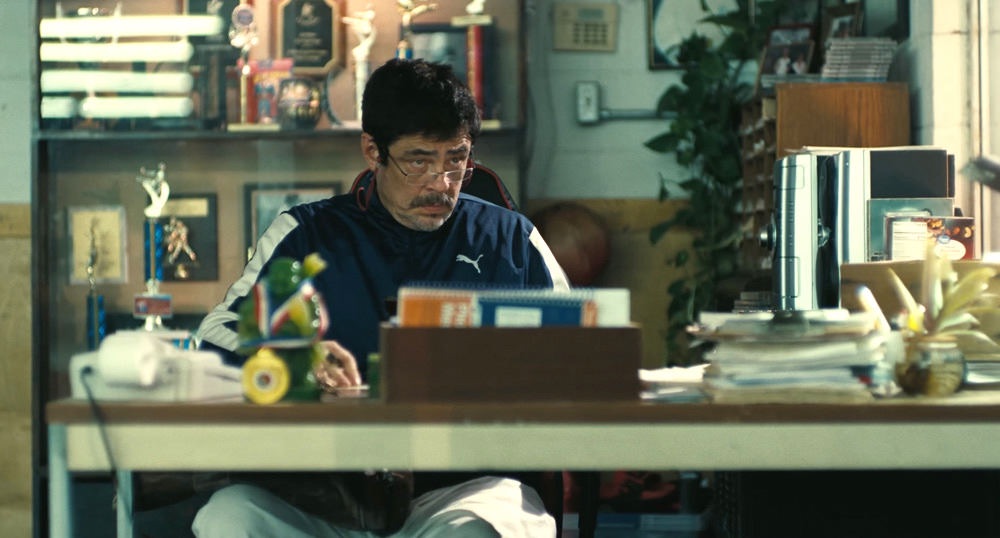
As ONE BATTLE unfolds deeper there is a fascinating approach to keeping Bob and more specifically DiCaprio both the center of attention while also just being a bystander thrown into the chaos. Perhaps it is also because ONE BATTLE has much bigger issues to touch on that expand way beyond the world of one man. When Willa is sent on the run by former French 75 member Deandra (Regina Hall), and Lockjaw breathing down their neck Bob seeks the aid of Sensei Sergio St. Carlos who besides being the calmest Sensei this side of the valley operates an underground sanctuary city for refugees who over the years and now more than ever have become pawns in both Trumps and conservative’s obsession with eradication. As a Latino critic often times there is “bite my tongue” approach when stories are being told for everyone else but Latino’s and especially Latin people in America are plot devices or in need of constant aide. And while ONE BATTLE certainly brings forth the devastating circumstances many find themselves in, there is great comfort in seeing a studio film lay out nearly forty (if not more) minutes for a prolonged segment involving the fight back as well as the compassion for actual human lives. Del Toro always a welcomed presence fits greatly in as the calming energy needed during one of the best sequences involving nerve wracking tension, nonstop hilarity and all to the tune of Jonny Greenwood’s piano key melody that evokes pure anxiety. The fight is far bigger than a movie and yet it is one of the rare American pictures that actually seems to give a shit about Americans who actually help this country.

For a film that stands on a lot of ideas and beliefs it also manages to deliver one of the most adventurous films this year or of any year. As the tension rises and Lockjaw finds his way to Willa, the film saves its large screen format tricks for a grand finale. Paul Thomas Anderson is no stranger to wide scope filmmaking whether it be the oil fields of “There Will Be Blood” or the the beautiful designs of “Phantom Thread.” But ONE BATTLE is one of his few contemporary films and therefore most use the disposals at hand to create something bigger than most screens can handle. A lover of California, Anderson uses the highways of the San Fernando Valley to operate as a rollercoaster where car chase sequences don’t just enthrall they down right engulf the audience. It can often be met with a chuckle and eye roll to say you felt like you were in the movie, but for ONE BATTLE and its final chase sequence, being in the movie is one thing, feeling every motion of the vehicle itself is a whole other factor that many probably didn’t think possible. Following Bob pursue Lockjaw who is pursuing Willa all while a dangerous member of the Christmas club seeks their own motives, allows for a dizzy and fascinating use of camera work from both Anderson and cinematographer Michael Bauman. Bauman’s entire scope of the film feels larger than life but his ability to take a hilly highway and create a ride that outplays an theme park simulator is inspiring and nauseating. Part of you wants Bob to get to Willa so the story has a happy ending, other parts because you’re nerves can only take so much and the entirety of you cannot believe a film can still bring out this much excitement. Again Anderson is not a filmmaker seeking to prove his contemporaries wrong but instead show how all elements can work together.
There is no time more than now where ONE BATTLE AFTER ANOTHER fits into our unfortunate cultural dynamics, and yet there still lies great hope not just in its final moments but throughout the movements. Willa and Bob may be from two entirely different worlds and the film always reminds us of Bob’s hesitation to understanding this new world, but what makes its conclusion so endearing and hopeful is both Bob’s guard coming down as well as the possibility that the next steps from kinder and wiser generations will be the right ones. Anderson a father himself may be reaching out more to his own children or trying himself to better understand. After all this is a filmmaker who has basked in the past and using techniques of the former masters and yet with his latest film he continues to show that the blending of today and yesterday may aesthetically be the right move. But in order to truly better the world the future has to always be on our mind ready to take on the next battle.
A+
ONE BATTLE AFTER ANOTHER IS NOW PLAYING IN THEATERS
 No assembly RequireD
Leave a comment