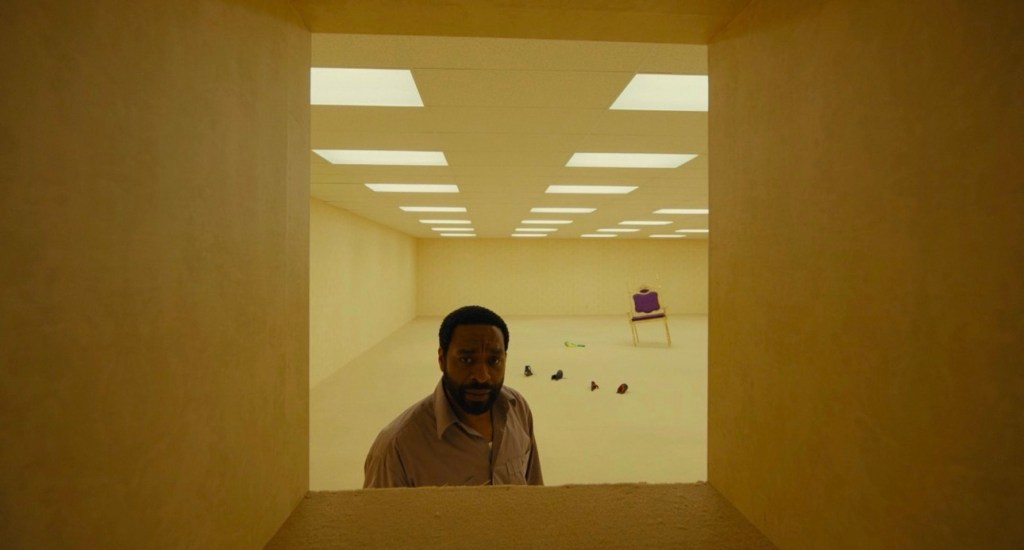
There may be some hesitation today to admit that the internet can still find positive ways to connect us all. Most of the time we find ways for us to be divided by the way we use and expose ourselves to the media we consume online. But there also (if you look carefully) is a sense of community that has continued to grow over the last decade or so based around the idea of both nostalgia and connected understandings of childhood emotions. Meme culture has allowed many millennials and now more so Gen Z to channel memories of the past and find ways to express and realize that many of us felt the same emotions when being exposed to certain images, people or places. In 2002 a 4Chan post appeared describing an unedited photo of an out of work furniture store. The image was simple, yellowish outdated carpet and wallpaper design and a few perfectly aligned walls to divide the space. An anonymous user then went out to call this space the Backrooms. A term that has now become synonymous with the perfect way to describe liminal space and give the feelings it bestows on us a name as well as a possible backstory. Liminal space is best described in online threads as “an empty or abandoned place or places that appear eerie, forlorn and often surreal. In easier terms think of your childhood mall that is now abandoned but still intact. Or to stick with movie themes a cinema still stuck in the 90s with the colorful dirty carpets and interior architecture design that feels like it popped out of a child’s imagination best described as “shape world.” To speed through some history liminal spaces and more importantly Backrooms grew into an online sensation amongst younger people eventually spawning off many DIY YouTube videos including and most famously a web series titled Backrooms created by self-made filmmaker Kane Parsons. In 2022 Parsons uploaded his first Backrooms episode simply titled “Found Footage” where a young man finds himself transported (or in internet slang no-chipped) out of reality and into these so-called backrooms where optical illusions become reality and something may or not may not lurking in the corners. A big success Parsons followed it up with more than twenty videos. All this to say after nearly four years later the now twenty-year-old filmmaker has found his way into the arms of big-name producers such as James Blum and James Wan as well as the always internet memed film studio A24 to release a full-length version of his Backrooms. There is a lot of history not entirely covered (as this review would be ten pages long at least) but beyond what liminal spaces make you feel or not feel BACKROOMS is an impressive feat simply because one it is the youngest filmmaker to helm an A24 produced film and more so just an acknowledgment creating chances for younger talent with fresh ideas that will speak to both millennials and Gen Z, a generation that appears to want to attend the cinema. The film itself is a triumph of many magnitudes and most of all on a filmmaking standpoint just an awe inspiring reminder that very few of us were doing this big of things at twenty years old. Hell the only media this critic was making at that age was filming Harlem Shake videos. But BACKROOMS and especially Parsons seems more interested in telling something bigger than just a success story of a young filmmaker getting a chance of a lifetime. Here is a young man who speaks beyond his years and is greatly articulate to express that recreating his YouTube success isn’t enough. In fact, it’s plain boring. Instead BACKROOMS wants to surprise and frighten, but more so speak on the behalf of a filmmaker who has something to say about his own fears, his generation and more so if the people before him did it all wrong and how we should be less afraid of the backrooms and more the people who find solace in them.
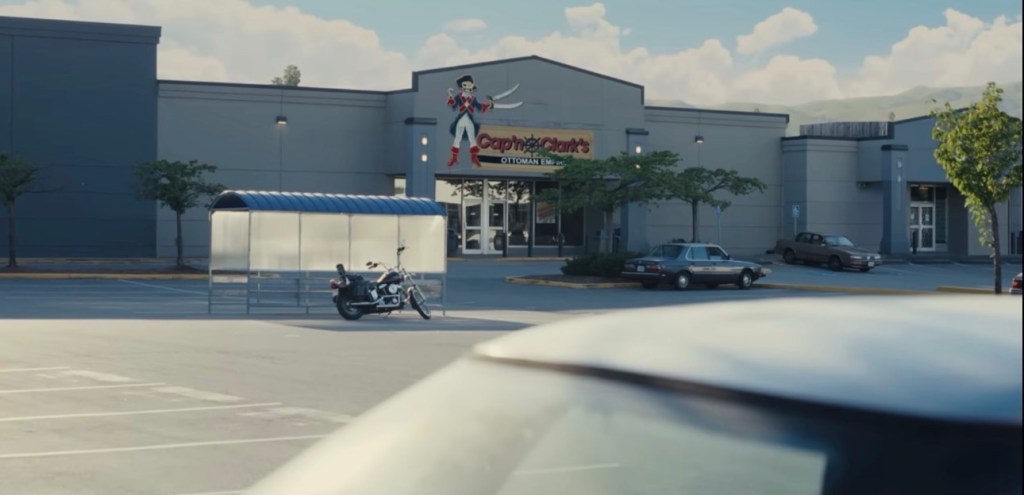
Nobody is buying discount furniture. Even for low-rate prices and no credit needed discount furniture stores such as Cap’n Clark’s Ottoman Empire struggle to compete against friendly yet more corporate brands. After all this is 1990 and stores like IKEA, Bob’s Discount and even Raymour and Flanigan are far more appealing than a cheap couch that already feels outdated. But for Clark (Chiwetel Ejiofor) the owner and manager of the store this is nothing short of a disaster. He has tried every gimmick he can think of, heck he has even dressed up as a one-legged pirate and did the song and dance in hopes of creating a fun enough commercial to win over those naysayers. But with this wife having left him and his inability to connect with his underpaid employees Kat and Bobby (Lukita Maxwell and Finn Bennett respectively) it is easier to spend his nights living in his store drinking himself to sleep. It doesn’t help that he cannot connect or seem to trust his therapist Dr. Mary Kline (Renate Reinsve) who struggles herself to get Clark to look at things from another perspective. These sessions mostly include Clark hesitate to engage in a therapeutical practice of role play where Clark must relive the last major confrontation with his wife. These sessions are as unsuccessful as his business. For Mary these lackluster meetings coincide with her unsuccessful self-help tapes that also feature their own late-night ads you only see on an insomniac filled night of tv draining. Clark stuck in his ways is still less keen in finding a new path and rather wallows about how if it was not for his unsuccessful wife, he would have had a successful architecture career by now no longer wasting his days at Ottoman Empire. Ejiofor as Clark does a good job at setting up a man that is easy to read as someone who refuses to take accountability and yet it is still never fun to watch the unsuccessful wither away in their pain. Clark may not be an appealing man but there is almost a sense of hope for him even if it means he must go to hell and back.
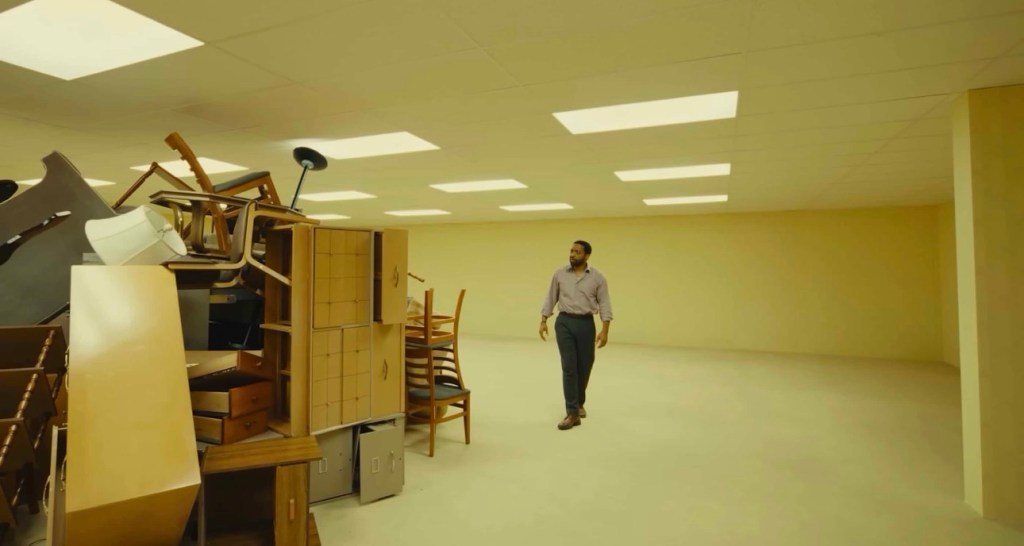
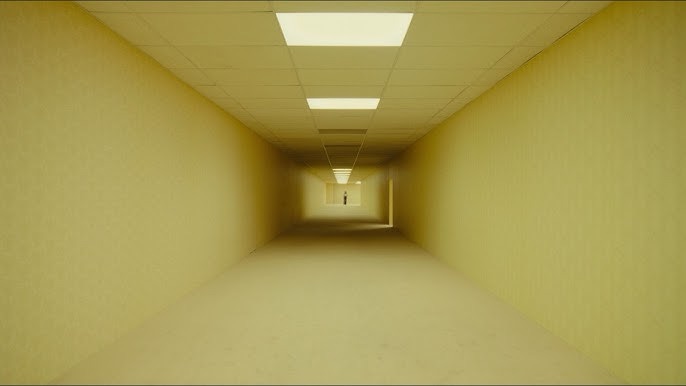
But all that wallowing is soon met with possibility when Clark discovers a hidden passage in the basement of his store that somehow transports him into his own backrooms of liminal space. While the film may kick off with the easy to go to horror prologue of showing us some form of monster, Parsons and screenwriter Will Soodik gradually approach the backrooms rather than just throw Clark into the chaos. This allows for an exciting venture once Clark finds his way into the rooms. Much like the original 4Chan posting and Parsons’ videos the backrooms are uncomfortable surroundings of familiarity mixed with unease. All this thanks to production designer Danny Vermette who recreates some images fans of the series will recognize while still giving them a larger screen uplift. It being the backrooms to a furniture store there are endless chairs and couches some piled onto each other while endless hallways are found empty with only the mind to create possibilities. Backrooms’ horror without question relies on the visual but what makes this liminal space idea, so horrifying is the possibility of what isn’t seen around every corner. For Clark this notion is both terrifying but curiously more exciting. Ejiofor initially doesn’t play Clark as someone jumping for joy about his newfound discovery but rather muted for the time as he mulls over what this could entail for his store and himself. Ejiofor a pro at the game doesn’t show his full intentions but more so allows early sequences in the film to always be a guiding point for where Clark’s true fears lie.
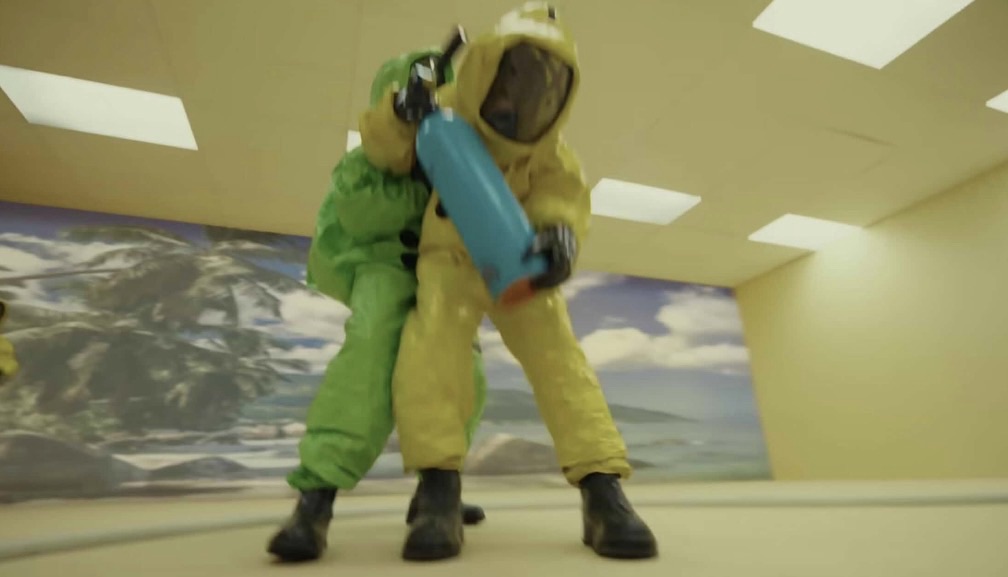
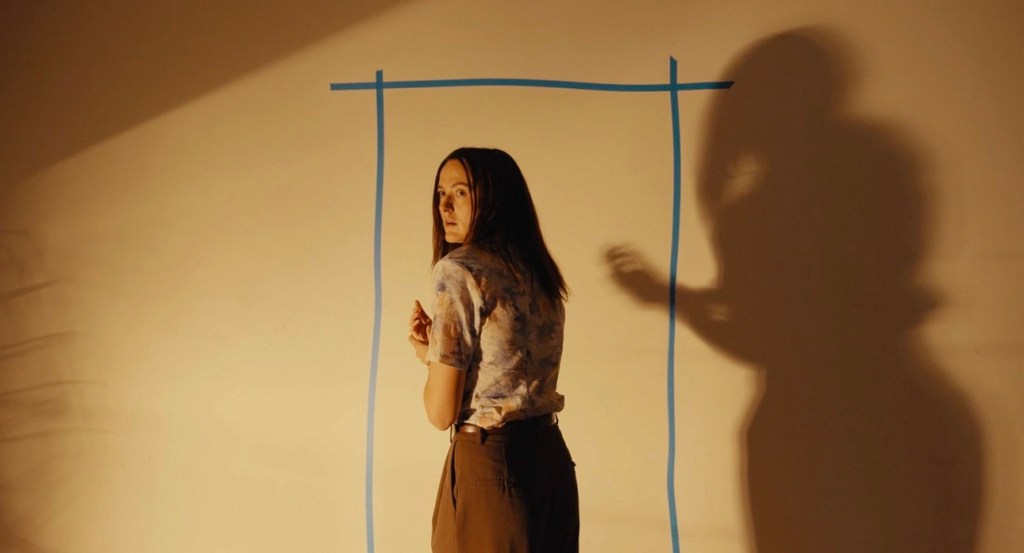
As the film progresses it becomes clear that Parsons (thankfully) has very little desire to recreate his short films. This is not to expand on the Backrooms videos that came before nor is it entirely to expand on the lore as a whole. Parsons instead wants to continue his new ideas with backrooms and use it as a vessel for his frustrations of today. For anyone who has seen the Backrooms series there is a clear ongoing story in some sense but there is also a branching out. Some shorts are fully found footage while others almost appear as power point presentations for some mysterious higher up. This time around BACKROOMS is more interested in digging deeper into the psyche. After all, there needs to be an argument made for why a short video YouTube series is given the longer bigger screen format. Yes, it is easy (and probably cheaper) to just recreate the frights and have the audience be a wanderer through the rooms, but Parsons doesn’t seem to be as scared of the backrooms as he is why so many are fascinated by its possibilities. Perhaps that is why the film takes a slight detour in switching up its narrative to allow Mary to not just focus her fears on Clark and her past but also venture into her own form of endless wonder. Renate Reinsve has had a killer few years beginning in 2021 with “The Worst Person in the World” up to last year’s “Sentimental Value.” And while she may not be a household name with general audiences BACKROOMS creates such an accessibility for the performer that it would be shocking to not see her name top billed on many more studio films going forward. Whether that is true success or her own personal goal is far from the point but rather just a statement on the actor’s ability to entrance the audience holding onto her every word. As Mary, Reinsve holds a lot of weight of both struggling with her own upbringing (involving her possibly schizophrenic mother) as well as the attachment many therapists latch onto their patients. Mary as a professional is far from unethical in her practice but the film approaches her as an empathetic human who both carries the anger she has towards people like Clark as well as the need to care for them and procure their safety. It’s an interesting balance that exists far before Mary enters any form of physical backroom.
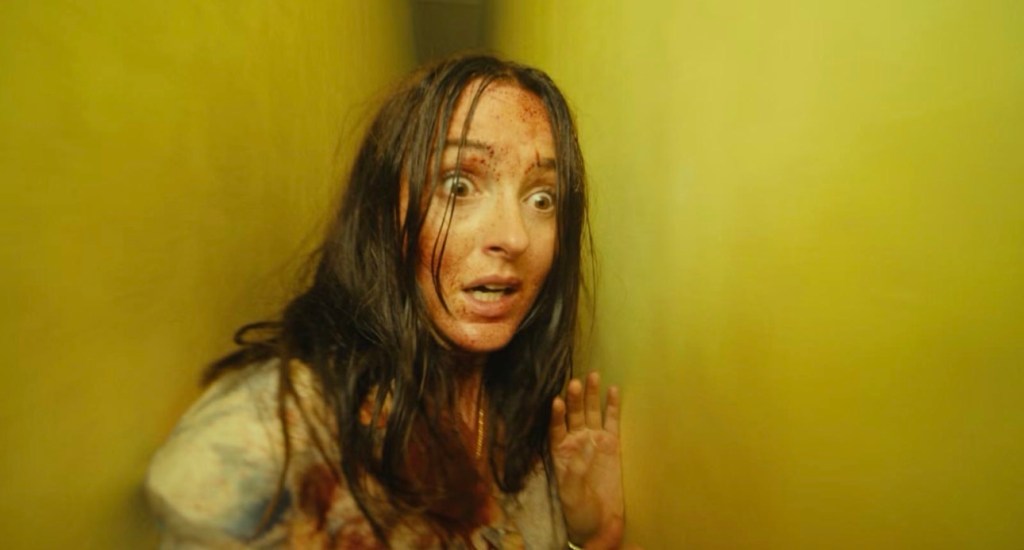
BACKROOMS is the rare horror movie as of lately (Obsession also rocking this next notion) that gets to have its frights and eat it too. Parsons doesn’t need to rile his audience up with every jump scare around the corner (although there are quite a few successful ones) but he also knows that the endless space provided is more than enough. With these images now on big screen display, he and his cinematographer Jeremy Cox can play around keeping nearly everything in eyesight and yet your mind wanders to the point of working overtime to take everything in. Even with its tighter framing there is so much at play that by the time any so-called monster is approaching your mind needs a moment to let it all sink in, all while having the crap scared out of you.
But BACKROOMS knows it can just settle at frights and while it’s a low bar to just settle there should still be praise for Parsons’ refusal to approach the film as just that. Clark’s deeper investigation of the backrooms and Mary’s search to better help him finds its way at an upsetting crossroads of accountability as well as Parsons’ deepest fears. Whenever the discussion of Gen Z comes up you can feel the tension rise in the older generations and now more than ever in millennials. As a millennial myself there is something darkly comedic about having arrived at a time in one’s own life where the next generation appears to be something to be afraid of. It can be seen as old man yells at cloud, but it can also be seen as supported by evidence. My parents feared my generation just as their parents feared them. It’s human nature as much as it is evidence based in certain but limited circumstances. And yet Parsons at just twenty understands the community that he grew up on. The film is set in 1990 after all (it even features an End Apartheid shirt) so his anger isn’t as high as some of his generation may want it to be. He understands the goodness that arose after all it is both millennials and Gen Z that pushed the liminal space online phenomenon. But where Parsons does allow that anxiety and trepidation to come out is in the lack of accountability many people take for their actions. The kids who are now quickly beginning to run the world have spent most of their youth in fear even if it’s approached with cynicism. They may lack irony (sometimes for the better) because they are often tired of having to beat around the bush. They fear for their lives in school, phones are their best friends and still many of the images they see on their devices are corrupted by those older than them. The third act of BACKROOMS relies heavily on our fears of distorted recreation so if nothing else BACKROOMS is one of the first truly great A.I. horror films given to us by a Gen Z filmmaker. But even more so Parsons is afraid that many of those that find solace in corrupt images and having a world they can recreate for their benefit are eventually going to win. The Backrooms for all its scary imagery are also just an open field where you no longer need to hold yourself up to a standard beyond your own. The lazy can be lazier, the aggressor can remove those he does not like, and the further one discovers about the place the more satisfying they can make it fit their narrative. Parsons does not believe everyone will fall into these trappings, but if the Backrooms have existed since the 90’s (and the movie greatly hints that they’ve been around much longer, possibly forever) then 2026 is the result of many entering these places and building worlds that fit their needs. And as we have seen more than ever these two worlds are colliding and before we know it, we won’t need a portal of some sort to enter backrooms, the will just be outside our doors. That liminal space growing smaller every day.
A-
BACKROOMS IS NOW PLAYING IN THEATERS FROM A24


Leave a Reply