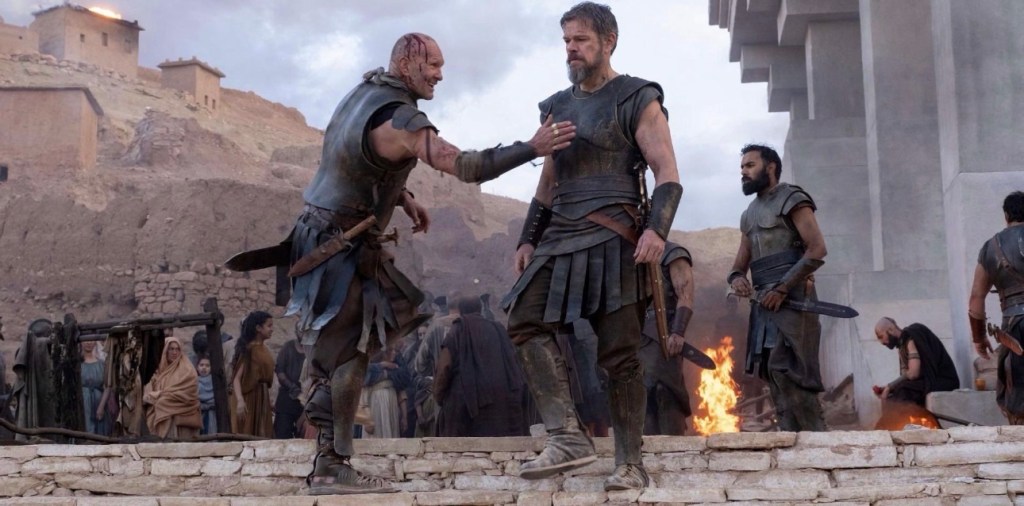
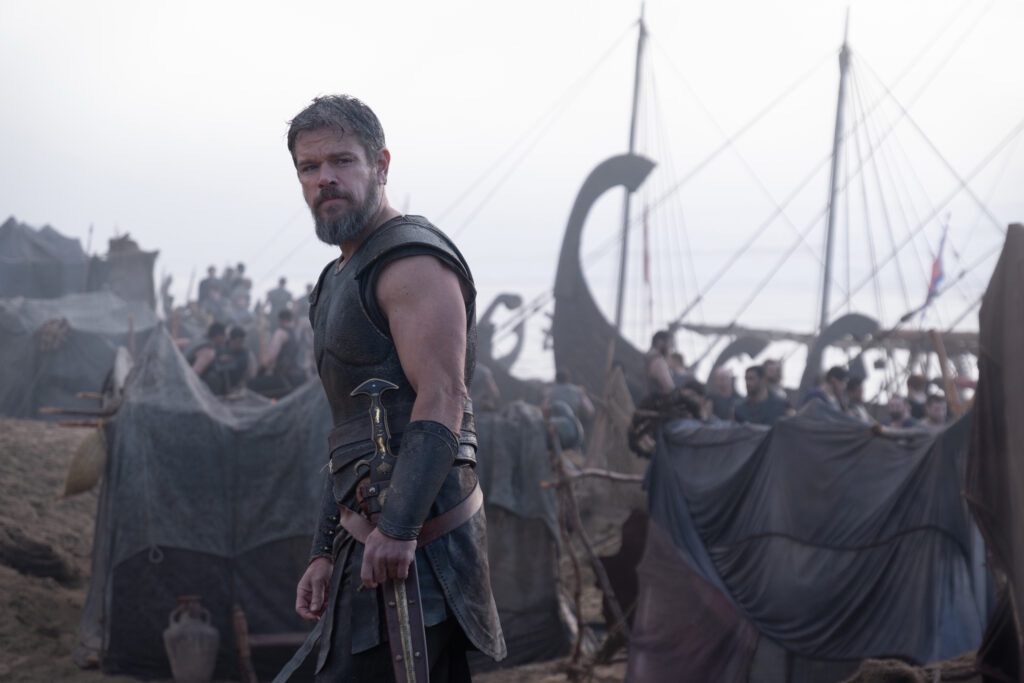
A story, even if fiction, if told long enough will eventually become the truth. Story telling’s power has been gifted to us, passed down from centuries from those wanting to preserve what they believed was both the truth and empowerment. Even tales where the storyteller knows they are fabrication must have a large measure of belief to properly convey a tale. But believing a truth and actuality will always be two separate things. THE ODYSSEY directed by Chrsitopher Nolan knows it is the latest adaption of Homer’s epic poem that has been told long before its 6th Century arrival into Greek literacy. But Nolan a filmmaker who has become one of the few modern household name directors knows that in order to tell a story there must also be a lie. THE ODYSSEY. A heroic story of a war hero on his journey back to his homeland is far more interested in the fears and lies men tell one another or themselves in order to justify actions of brutality. A film, that much like Nolan’s previous outing “Oppenheimer” understands that the heroism of war is never what is actually brought home by the warrior. And while the story of Odysseus is to evoke fear into enemies and motivation to his supporters, Nolan is seeking deeper into the pain of someone who physically must travel across seas to find home but knows in his heart his journey was lost long before the war ever ended. Nolan as a filmmaker seemed almost destined to deliver his own take on this long path home as many of his films seem to circumnavigate around men who both are trying to get home as well as those who know deep down they have no interest in ever returning. And much like the epic itself Nolan’s THE ODYSSEY is a task of the highest caliber that is able to both show the best and worst tendencies of a director who even in his most audacious movements still finds himself limited by his own abilities as a purely popcorn entertainer. But at nearly three hours and a film practically begging you to see it in the largest format it is impossible not to be won over by its magic. A film that even in some of its disjointed struggles leaves you ecstatic on the gift of what cinema can bring when it is firing on all cylinders. The journey to get home is Hell but what a journey it is and one that deserves to be told again and again.
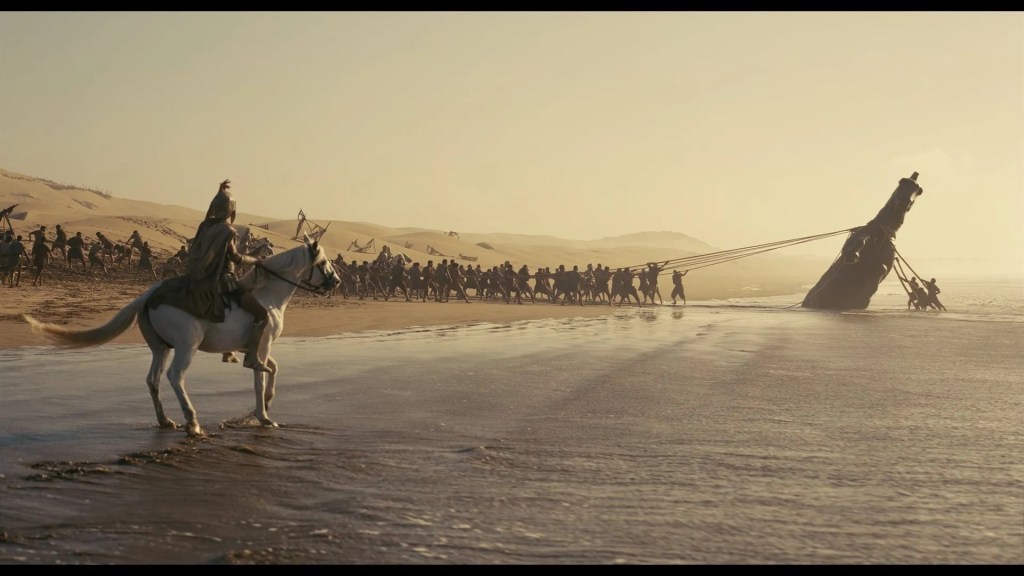
A face. A fleet. A war. A man. As the thunderous pounding begins, we are told through a bard’s tale the story of Odysseus (Matt Damon). A man who led and fought in the Trojan War under the rule of general Agamemnon (Benny Safdie). In his homeland of Ithaca many banquets are held in hopes of Odysseus’s return. But while these feasts may be a riotous occasion, they are far from honorable. Ithaca left in the care of Odysseus’s wife Penelope (Anne Hathaway) and his son Telemachus (Tom Holland) has instead been overrun with suitors vying for Penelope’s hand in marriage and more importantly the throne of Ithaca that sits empty awaiting a king. Led by the glutinous Antinous (Robert Pattinson) the suitors defy not just the Gods and the all important Zeus’s Law but even more so the law of man reducing Odysseus’s kingdom to an abandoned waste. But even in his absence the stories continue to be told as Telemachus is both interested in any new word of his father as well as the stories of his triumphs that include the infamous Trojan Horse attack on Troy that led to the end of the war. Nolan, even knowing the story is very familiar, especially to a new generation of high school English class students, is still given a difficult task of laying down the groundwork in an extended prologue that structures itself in typical Nolan fashion aka nonlinear. Glimpses of Odysseus war triumphs are shown as well as his time learning to fight and lead on Ithaca and yes spending time with his adorable puppy Argos. It also doesn’t take long for THE ODYSSEY to throw out nearly all its cinematic skills right from the start. Hoyte van Hoytema’s gorgeous cinematography strikes into your core (no matter the screen’s format) as its on set locations of Greece, Morocco and Scotland circle around the audience delivering a sensory overload long before a sword is ever drawn. Cued up is Ludwig Göransson’s score that is a mixture of ancient instruments come back to haunt any warrior alongside a wave of new techno beats. Göransson who has become a new staple of Nolan films takes the MVP early on transporting us to a time of both long ago as well as immortalizing human fears that will never escape mankind. All this and we still haven’t been told where Odysseus himself actually resides.
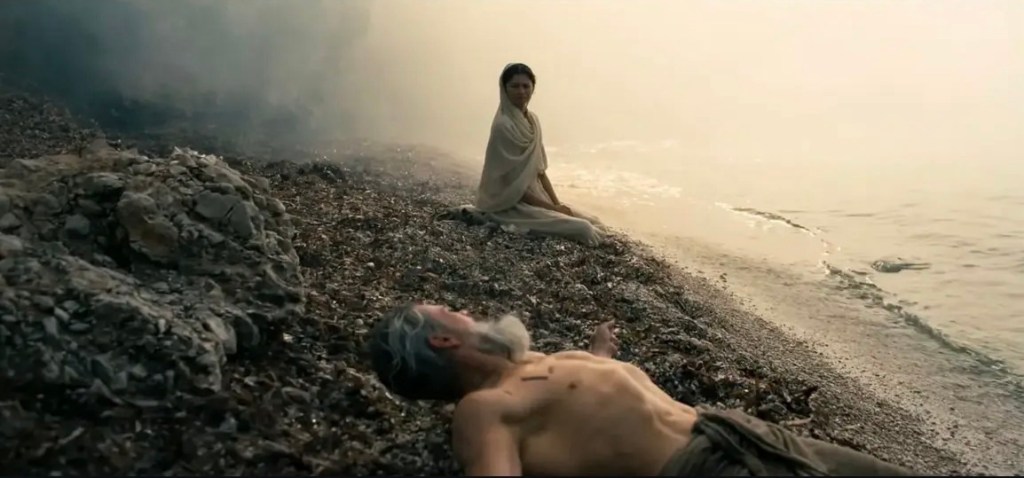
Where Odysseus does find himself is in the arms of the beautiful nymph Calypso (Charlize Theron). Years after the war Odysseus has still not returned home although he claims he does not know what veered him from his path nor where his army of men are. What he does know is that Calypso’s mysterious white lotus has kept him on this island and all he has now are his stories. THE ODYSSEY while never (and thankfully) in narration still allows Nolan’s script to have an engaging fashion of allowing its somewhat episodic adventure to have a distinct storyteller. One who is bound to his or her individual beliefs. Odysseus knows he is guided by the goddess Athena (Zendaya) but even with her accompaniment still believes that Zeus’s Law is merely a practice given to children to strengthen their morality but does not apply in war time. Instead Odysseus himself has defied the Gods in his attempt to get home. In doing so means being at odds with many of his warriors including his brother-in-law Eurylochus (a stellar Himesh Patel). Damon as Odysseus carries a great arrogance that both annoys the viewer as well as strikes an interesting balance of curiosity. Why is this man who is praised so victorious willing to damn himself for his ego. It is a tale of men that is as old as time and therefore easily digestible for a modern audience. As Odysseus’ ego persists so does the risk of his men’s lives as they encounter many a strange lands that will be very familiar for those well versed book readers.
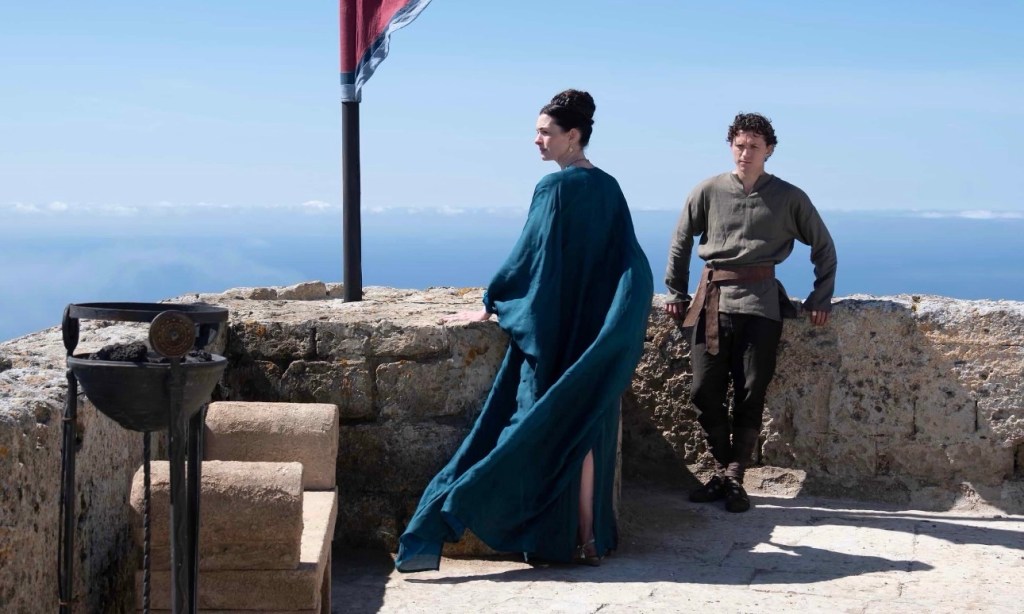
Perhaps it is the journey itself where THE ODYSSEY and more so Nolan’s script (fully adapted by himself) finds itself at a standstill. The task of adapting is already a grand one, but funny enough for a story that has been passed down and reimagined for centuries far too few have ever truly landed all the right notes. It is impossible to go through every inkling that this story has passed through but just based on the few film and television adaptations of lately it is clear to see there is a divide in how to approach Homer’s work. The biggest question is how grounded do you make the film in human behaviors while also recognizing the epic poem at hands full of Gods and monsters that are as truthful as the words being told and sung. For Nolan he seeks a far more humanistic side that sometimes leaves its more fantastical moments less by the waste side and more so for the cinematic elements outside script writing. The cyclops, the Laestrygonians and the Sirens are all present here (and some more deadly obstacles) and it is clear that Nolan and his VFX team are all hands on deck. They attribute to some truly engaging sequences (and one very poorly lit one), but it also feels jarring at times with the way it’s edited together. Editor Jennifer Lame who had the impossible task of editing Nolan’s “Tenet” doesn’t necessarily struggle here but when given Nolan’s script the editing can often feel like there are pieces fit together more because they must follow one another rather than coherently falling into the same place of Odysseus’s mental journey. But to pull a Nolan and jump ahead nonlinear style THE ODYSSEY reaches a stunning finale that often feels rushed to pull all its beliefs together while trying to convince they were being formed throughout. And while these ideas are scattered throughout its deeper mediation comes later while its early moments can easily be distracted by some pure blockbuster entertainment.
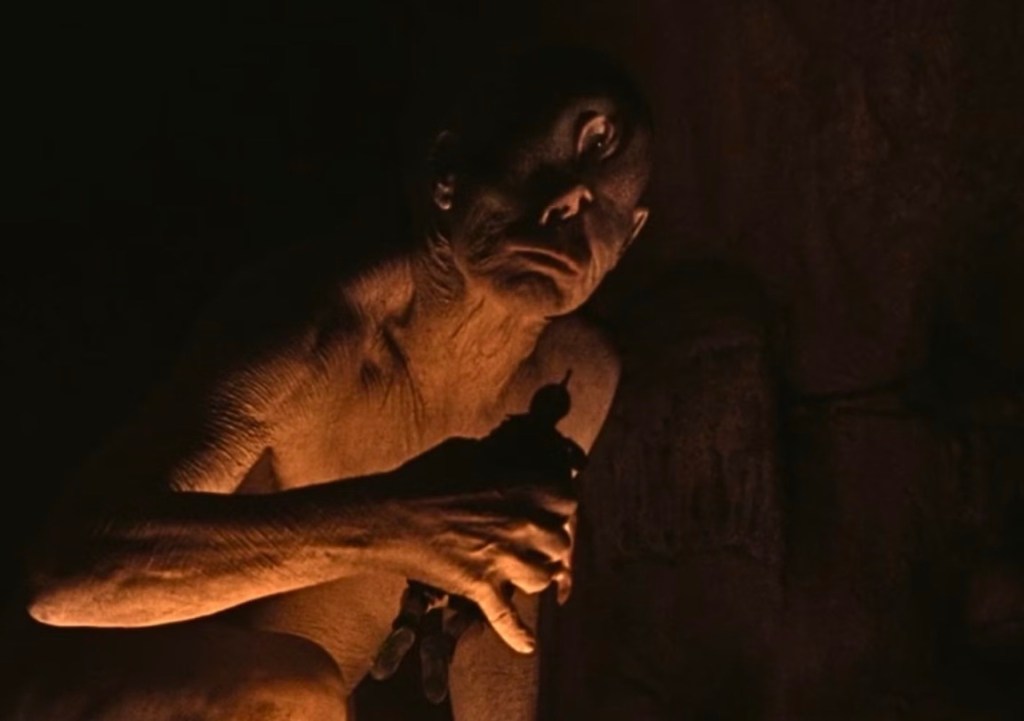
But long before that finale arrives Nolan wants us to know he has a rolodex of not just great ideas but an endless supply of who’s who performers. THE ODYSSEY may seem like a perfect cast of young talent colliding with established names, but it is also a film that could have warmed up to the idea of unknowns versus household names. The ensemble is large, from Jon Bernthal to Lupita Nyong’o to John Leguizamo to Mia Goth. But it is also a film that doesn’t feel the need to give every big or better known name a grandiose moment. In fact it can be a litmus test for audiences to accept that screen time doesn’t equate to performance level as well as understanding the quieter the role the better chance of actually being a scene stealer. Not the other way around. John Leguizamo as the tender but wise Eumaeus (Odysseus’ trusted blind swine herder) becomes the heart of patience that film conveys. As Eumaeus the film is able to find itself at a needed halt where we can see that even for all Odysseus arrogance there is still a peace he brings that is needed in Ithaca and Leguizamo’s performance always harbors that stillness. On the opposite end Samantha Morton as Circe the vengeful but fearful witch is a stunning example of the days where movies were stolen by performers with just once scene. Morton as Circe is terrifying but also allows the audience to understand her deep fears of a world of violent and hateful men. In a prolonged segment that delivers Nolan’s most disturbing segment since the arrival of the Joker himself, Morton is able to push past a gaggle of dangerous men and wide armed performers to display the true viciousness that controls them and the film’s entirety. For the smaller role of Sinon, Elliot Page is a deeply empathetic reminder that all who fall must never be forgotten as Page holds some of the film’s most heartbreaking ideas that war is never won it is only remembered by the dead and those that chose to mourn them or not. But no other performer gives a deeper reexamination of Homer’s work than Himesh Patel as Eurylochus. A character that for centuries has been seen as merely a roadblock and betrayer of Odysseus is instead reconstructed to be the mirror that Odysseus refuses to stare into. A strong warrior, Patel performs Eurylochus less as the voice of reason and more so someone that sees past the bullshit of Odysseus. A troubled man himself, Eurylochus is both the wisdom Odysseus has hidden away as well as the stubbornness of a warrior that needs to engage with his desires. Patel and the characterization of Eurylochus is also Nolan’s best example of displaying how this retelling of THE ODYSSEY is far less about the victories of man and instead the weight of pain he has distilled onto others.
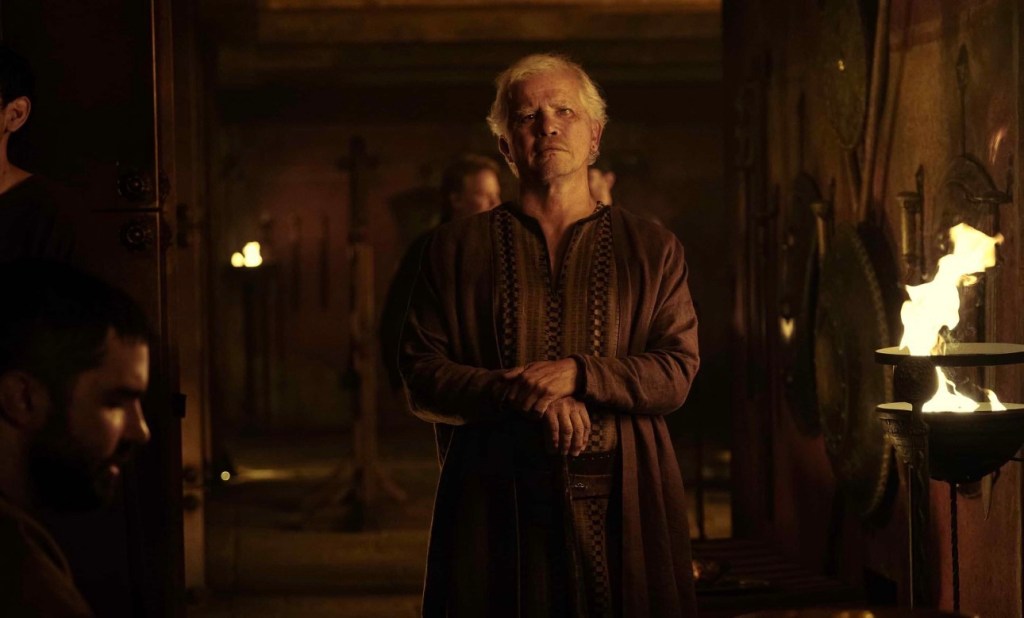
It is this pain that THE ODYSSEY is able to carry its greatest ideas and bring itself home to a whopping final forty minute finale that feels like an epic all of its own. And while Nolan’s script feels eager to pull a rug out from us it is far more understanding of its own ideas than it gives itself or possibly its audience credit for. It is almost upsetting when a final monologue from Damon is performed because while some may feel its weight it is also done in a fashion so all can understand in case they were not paying attention for the previous two hours. Nolan a gifted filmmaker continues to be a screenwriter that regurgitates his ideas for anyone still catching up. It is a limitation made more awkwardly by the fact that his films are far from complicated. But thankfully he is also a director who is so skillful in the complex art of cinema. THE ODYSSEY’s finale is one of grand stature that brings home all its heartbreaking ideas that man can only move on from the war once he has truly honored those he has lost including those he has slain. It is also a finale of accountability. As its nonlinear structure continues and we flashback to the Trojan horse attack once again it is able to be deeply understand the role of the men who hid away inside that horse. To be a creature of attack and trickery during a time of peace is just as upsetting as watching Oppenheimer accept his role in the destruction of mankind. Fact and fiction both at hand but the pain breaks through any wall. And for Odysseus, returning home from the war and being a hero are two very distinct things. And while Nolan’s script understands this the film becomes a heartbreaking joy to watch as its performers both accept a fate far less praised than their victories. Damon and especially Hathaway are beautifully engaged in these concepts that even for Nolan’s largest scale film, yet these moments feel intimate and small. Just a conversation of man and wife a wall dividing them until they two can accept who has left home and who instead has returned.
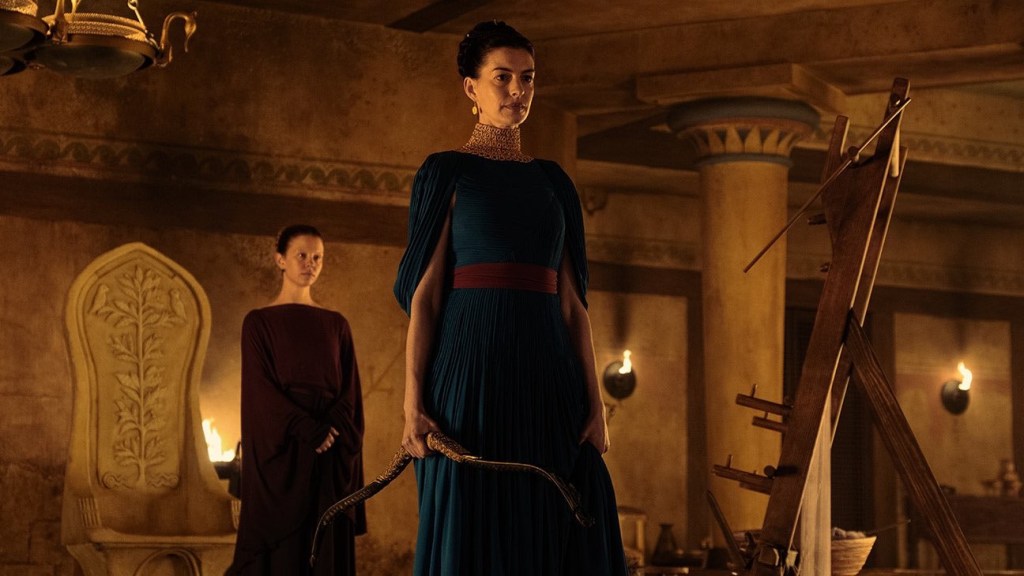
THE ODYSSEY may be the kind of film that spells out a little too much and even shows fully what could be understood with ease, but it also knows it never wants to treat things lightly. Much like Odysseus himself, it wants to defy the gods whatever that may mean for Nolan. To show things can be done his way while also being terrified of the ramifications he has brought on. It’s more admirable to go about things this way then to blindly believe your truth is all that matters. Nolan’s fears of abandonment and the pain he may have caused his own family from being away are right on the screen and while box office numbers and critical acclaim may say otherwise the man may feel he has yet to fully come home. But THE ODYSSEY is another exciting part of his long unending journey.
A-
THE ODYSSEY IS NOW PLAYING IN THEATERS


Leave a comment